


Introduction:
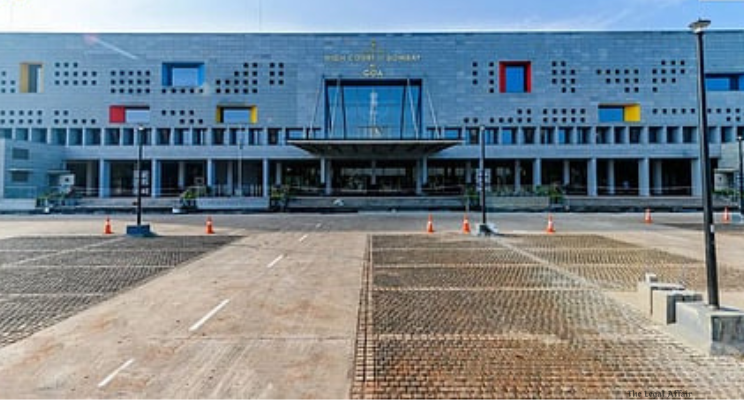
In a landmark judgment that reinforces the fundamental right to peaceful assembly, the Goa Bench of the Bombay High Court quashed an FIR against two members of the Revolutionary Goans Party (RGP), Tukaram Parab and Rohan Kalangutkar. The court emphasized that prosecuting individuals to suppress democratic agitations, unless they turn violent, undermines the essence of democracy.
Background of the Case:
On January 6, 2021, RGP members, led by President Tukaram Parab and party member Rohan Kalangutkar, organized a protest outside the Valpoi Police Station in Goa, opposing the proposed establishment of an Indian Institute of Technology (IIT) in the city. Approximately 300 individuals participated, raising slogans against the police. The prosecution alleged that the leaders incited the crowd to maintain a blockade and threatened to storm the police station, potentially causing destruction of government property and harm to staff.
Charges Against the Accused:
Based on these allegations, Parab and Kalangutkar were charged under several sections of the Indian Penal Code (IPC):
- Section 143: Unlawful assembly
- Section 145: Continuing in unlawful assembly despite command to disperse
- Section 147: Rioting
- Section 341: Wrongful restraint
- Section 186: Obstructing public servant in discharge of public functions
- Section 353: Assault or criminal force to deter public servant from discharge of duty
- Section 120-B: Criminal conspiracy
- Section 149: Every member of unlawful assembly guilty of offense committed in prosecution of common object
Arguments Presented:
Petitioners’ Arguments:
The defense, led by Senior Advocate C.A. Ferreira, contended that the protest was a peaceful exercise of the fundamental right to assemble and express dissent under Article 19(1)(b) of the Indian Constitution. They argued that the charges were baseless, lacked substantive evidence, and were intended to suppress legitimate democratic expression. The defense emphasized that there was no violence, damage to property, or assault on public servants during the protest.
Prosecution’s Arguments:
Represented by Additional Public Prosecutor Pravin Faldessai, the prosecution maintained that the large gathering outside the police station, accompanied by slogans and alleged threats, constituted an unlawful assembly with the potential to escalate into violence. They argued that the preventive measures, including filing the FIR, were necessary to maintain public order and deter any possible lawlessness.
Court’s Observations and Judgment:
The division bench, comprising Chief Justice Alok Aradhe and Justice Mahesh Sonak, provided a detailed analysis:
Right to Peaceful Assembly: The court reaffirmed that Article 19(1)(b) guarantees citizens the right to assemble peacefully without arms. This right is fundamental in a democratic society and should not be curtailed unless the assembly turns violent or poses a clear threat to public order.
Misuse of Prosecution: The bench cautioned against the misuse of legal provisions to stifle democratic protests. They noted that initiating prosecutions based on vague or unsubstantial charges to suppress peaceful agitations is detrimental to democratic values. The court stated, “Prosecutions must not be launched to stifle agitations that are part of the democratic process so long as people do not take the law into their own hands or indulge in violence or damage to public or private property.”
Evaluation of Evidence: Upon reviewing the evidence, the court found it insufficient to substantiate the charges. There was no concrete proof of violence, property damage, or obstruction of public servants by the accused. The allegations lacked the essential ingredients required to constitute offenses under the cited IPC sections.
Section 149 IPC Application: Addressing the applicability of Section 149, which deals with the liability of every member of an unlawful assembly, the court emphasized that mere presence in a gathering does not constitute an offense. There must be a shared unlawful objective, which was not evident in this case. The court observed, “The presence and sharing of a common unlawful object is a must to invoke Section 149 IPC. Mere presence is not enough.”
Based on these observations, the court concluded that the continuation of the prosecution would amount to an abuse of the judicial process. Consequently, the FIR and subsequent chargesheet against Parab and Kalangutkar were quashed.