


Introduction:
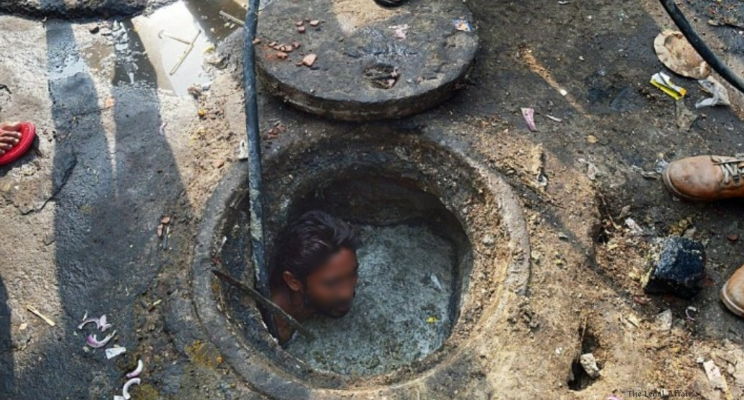
The Gujarat High Court, in a significant hearing on March 5, 2025, expressed strong displeasure with the Chief Officer of Patdi Nagar Palika for failing to take appropriate action after the tragic deaths of two sanitation workers engaged in manual scavenging. The court was hearing an application in an ongoing 2016 Public Interest Litigation (PIL) filed by the petitioner organization, Manav Garima, which highlighted the incident involving the death of two workers, one allegedly a minor, while cleaning a septic tank near a school in Patdi, Surendranagar district. The petitioner contended that the workers were engaged in manual scavenging under oral orders from the municipal officers, in direct violation of legal provisions and contractual obligations. The division bench of Chief Justice Sunita Agarwal and Justice Pranav Trivedi took serious note of the fact that apart from terminating the contractor’s services, the municipality had not taken any penal action against him despite his clear breach of contract and legal violations. The court directed the Chief Officer to conduct a thorough inquiry into the engagement of workers, their wages, and the responsibility of supervisory officials in the entire episode. It also stressed the need for an aggressive awareness campaign and a robust grievance redressal mechanism to prevent further deaths due to manual scavenging.
Arguments of Both Sides:
The petitioner organization, Manav Garima, strongly contended that the deaths of the sanitation workers were a direct consequence of gross negligence on the part of the municipality. The counsel for the petitioner argued that the victims were engaged in manual scavenging despite explicit legal prohibitions and Supreme Court directives banning such hazardous work. The petitioner highlighted that one of the deceased workers was a minor, which further aggravated the severity of the violation. It was also submitted that the contractor, who was engaged for the management and maintenance of drainage systems, had blatantly violated a critical clause in the agreement, which categorically prohibited the employment of workers for manual scavenging. The petitioner further argued that the municipality, being the principal employer, had failed in its duty to supervise the contractor’s operations and ensure compliance with the contract. The petitioner’s counsel emphasized that apart from terminating the contractor’s services, the municipality had not taken any punitive action, which indicated a lack of accountability and an attempt to hush up the incident. It was also pointed out that no inquiry had been conducted into whether proper wages were being paid to the workers, whether they had safety equipment, or whether their employment was legally documented. The petitioner stressed that this was not an isolated incident and that repeated deaths of sanitation workers in manual scavenging necessitated a systemic intervention. A larger awareness campaign was needed to educate municipal authorities and contractors about the legal consequences of violating manual scavenging prohibitions. The petitioner’s counsel also urged the court to direct the state government to set up a grievance redressal mechanism where sanitation workers could immediately report violations without fear of reprisal.
On the other hand, the counsel for Patdi Nagar Palika attempted to justify the municipality’s actions by stating that the contractor had been engaged under a formal agreement, which explicitly forbade manual scavenging. It was argued that the municipality had taken prompt action by issuing a notice to the contractor and initiating steps for contract termination. The municipal counsel further stated that the Chief Officer had issued a show-cause notice to the contractor, seeking an explanation as to why compensation should not be recovered from him for the deaths of the workers. The counsel asserted that the municipality was not directly responsible for the engagement of workers, as they were employed by the contractor, and that necessary steps had been taken to address the issue. However, the court was not satisfied with these explanations and observed that the municipality had not provided any evidence of effective supervision over the contractor’s activities.
Court’s Judgment:
The Gujarat High Court took a strong stance against the lack of accountability demonstrated by Patdi Nagar Palika. While perusing the affidavit submitted by the Chief Officer, the court noted that there was “absolute silence” regarding any concrete action taken after the incident. The court emphasized that ignorance of such a grave violation could not be condoned, especially when a minor was allegedly involved. It categorically stated that the municipality, as the principal employer, had a duty to supervise the contractor and ensure compliance with legal mandates. The court pointed out that Clause 13 of the contract explicitly prohibited manual scavenging and mandated strict adherence to Supreme Court guidelines on the matter. However, the contractor had disregarded these conditions, resulting in the tragic deaths of two workers. The court noted that while the municipality had issued a show-cause notice to the contractor, there was no mention of any further penal action, such as blacklisting the contractor or initiating criminal proceedings. The court directed the Chief Officer to conduct a thorough inquiry into how workers were being engaged, whether proper wages were being paid, and whether necessary safety measures were in place. The court also emphasized that proof of the workers’ age needed to be placed on record to ascertain whether a minor was illegally employed. Additionally, the role of the sanitary inspector, who was responsible for supervising sanitation activities, was also called into question. The court observed that there was no record of whether any disciplinary action had been taken against municipal officials who failed to prevent the violation.
Beyond this specific incident, the court acknowledged the broader issue of repeated deaths of contract workers engaged in manual scavenging. The petitioner’s counsel urged the need for an aggressive awareness campaign, to which the court agreed. The court stated that municipal commissioners should issue strict directives warning that disciplinary action would be taken in case of future violations. It also emphasized the need for deterrence, suggesting that a robust grievance redressal mechanism should be established at the municipality level. The government pleader, representing the state, submitted that sanitation workers should have direct access to a complaint mechanism if they were asked to engage in manual scavenging. The court endorsed this view and stressed that avoiding or covering up such incidents was unacceptable. It remarked that municipal authorities could not claim ignorance, given the media coverage and public awareness surrounding such violations. The court, therefore, directed the Commissioner of Municipal Administration to convene a meeting of local governing body heads to devise a permanent solution to the recurring issue of sanitation worker deaths. The government pleader was instructed to communicate the court’s order to the Commissioner and ensure that a concrete plan was developed. The court directed the Chief Officer of Patdi Nagar Palika to file a fresh affidavit with a detailed report on the inquiry and scheduled the next hearing in three weeks.