


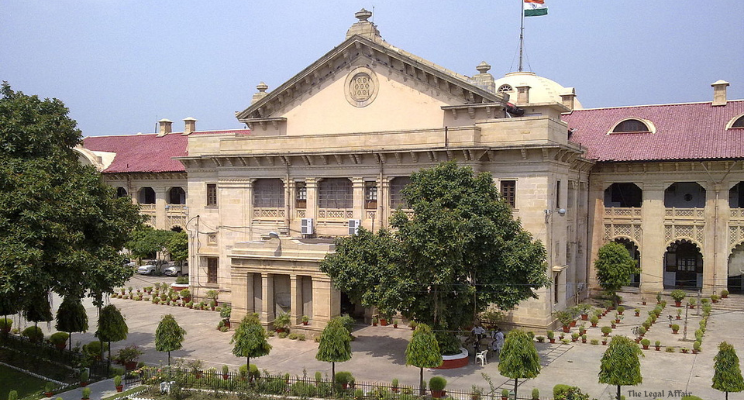
Introduction:
The Allahabad High Court has reserved its judgment on a plea filed by Alt News co-founder Mohammed Zubair, challenging an FIR lodged against him for allegedly inciting violence through his posts on ‘X’ (formerly Twitter) concerning a speech delivered by controversial priest Yati Narsinghanand. The FIR was registered by the Ghaziabad Police in October 2024 following a complaint by Udita Tyagi, an associate of Narsinghanand, alleging that Zubair’s posts promoted enmity among religious groups and provoked protests outside Dasna Temple. The case took a significant turn when authorities invoked Section 152 of the Bharatiya Nyaya Sanhita (BNS), which pertains to acts endangering the sovereignty, unity, and integrity of India. The High Court extended the stay on Zubair’s arrest until the delivery of its final judgment. A bench comprising Justice Siddhartha Varma and Justice Yogendra Kumar Srivastava also sought clarity on whether the petitioner should be granted protection until the filing of the charge sheet. The State strongly opposed such protection, citing Supreme Court rulings that emphasized the necessity of a thorough investigation. The case has reignited debates on the boundaries of free speech, the role of social media in public discourse, and the responsibility of influential individuals in maintaining communal harmony.
Arguments of Both Sides:
The petitioner, represented by Senior Advocate Dileep Gupta, contended that the protests outside Dasna Temple were a direct consequence of Narsinghanand’s alleged remarks against Prophet Mohammed, not Zubair’s social media posts. He argued that his client merely highlighted the controversial speech to bring attention to its provocative nature and press law enforcement agencies into action. Gupta drew an analogy with the recent remarks made by poet Kumar Vishwas regarding the name of Bollywood actor Saif Ali Khan’s son, Taimur. He pointed out that when an intruder attacked Saif Ali Khan’s residence following Vishwas’ comments, nobody blamed Vishwas for instigating the attack. Similarly, holding Zubair accountable for the Dasna protests merely because of his social media influence would be an unreasonable stretch. Furthermore, Gupta stressed that the case was not just about an FIR against Zubair but also about the larger question of freedom of speech under Article 19 of the Indian Constitution. He emphasized that Zubair, as a fact-checker and journalist, had a professional obligation to expose incendiary statements and seek appropriate legal action against those responsible for spreading hatred. The defense further argued that invoking Section 152 BNS against Zubair was an overreach, as there was no intent to endanger national integrity, and his posts were meant for public awareness rather than incitement. Gupta also highlighted that the Supreme Court, in multiple judgments, had held that FIRs aimed at curbing journalistic work should not be entertained unless they disclosed a direct and imminent threat to law and order. In contrast, the State, represented by Additional Advocate General Manish Goyal, countered these claims by asserting that Zubair’s posts were not neutral journalistic content but rather deliberate attempts to stir communal disharmony. He argued that Zubair, with over 15 lakh followers, wielded significant influence on social media and knowingly amplified an old video of Narsinghanand to incite protests. Goyal relied on the Supreme Court’s decision in Neeharika Infrastructure Pvt. Ltd. vs. State of Maharashtra, which held that courts should not interfere in ongoing investigations unless a prima facie case of abuse of process was established. He further cited Dineshbhai Chandubhai Patel vs. State of Gujarat and Somjeet Mallick vs. State of Jharkhand, asserting that an FIR could not be partially quashed, and the entire matter needed judicial scrutiny. The State maintained that Zubair’s intent and conduct were evident from the material on record, and his actions had not only led to the Dasna protests but also jeopardized public peace. The prosecution also pointed to a previous instance where Zubair had allegedly distorted the map of Maharashtra in one of his ‘X’ posts, further demonstrating his history of controversial content. The bench, during the hearing, sought a short affidavit from Zubair detailing his apprehensions regarding his liberty being infringed. AAG Goyal responded that Zubair had the option to apply for anticipatory bail if he feared arrest.
Judgement:
However, the court appeared skeptical of the State’s broad interpretation of Section 152 BNS and posed critical questions regarding whether a citizen’s dissatisfaction with state inaction could be deemed a subversive activity. The judges also inquired whether critiquing government policies or drawing attention to inflammatory speeches could, in itself, be considered an offence. These questions underscored the delicate balance between national security laws and fundamental freedoms. While reserving its judgment, the court extended the interim stay on Zubair’s arrest and indicated that it would closely examine the application of Section 152 BNS in the present case. The case has drawn national attention, with legal experts and civil rights advocates arguing that invoking laws meant for safeguarding national integrity in a case concerning social media commentary sets a dangerous precedent. The final judgment is expected to provide clarity on whether posting about communal speeches, even with a critical perspective, can attract criminal liability under stringent legal provisions.