


Introduction:
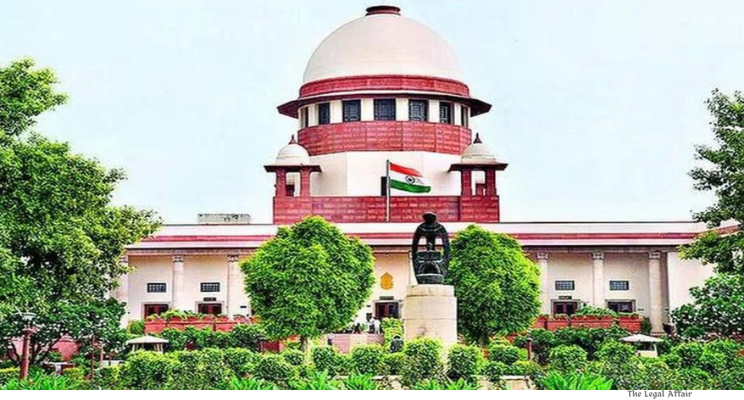
In a significant ruling reinforcing the principle of restitution, the Supreme Court in Dr Poornima Advani & Anr. v. Government of NCT & Anr., 2025 LiveLaw (SC) 254, has held that a person deprived of the use of money to which they are legitimately entitled has a right to compensation in the form of interest. The case involved the loss of an e-stamp paper worth ₹28,10,000 purchased by the appellant for a property transaction. When the e-stamp paper was misplaced by a broker, the appellant had to purchase another one, leading to financial deprivation and delay in acquiring the property. Seeking a refund, the appellant approached the Collector of Stamps, who denied the request, prompting litigation that eventually reached the Supreme Court. The High Court had ordered a refund but denied interest on the amount. On appeal, the Supreme Court ruled that the appellant was entitled to interest, emphasizing that when money is wrongfully retained, interest must follow as compensation for unjust enrichment and deprivation. The judgment draws upon the doctrine of restitution, asserting that a party wrongfully deprived of their rightful money must be restored to their original financial position. The court directed the respondents to pay ₹4,35,968 as interest within two months.
Arguments of Both Sides:
The appellants, represented by advocates Abhishek Puri, Sahil Grewal, Surbhi Gupta, Reeta Dewan Puri, and P. N. Puri, contended that the government had unjustly enriched itself by retaining the e-stamp amount without legal justification. They argued that since the appellant had paid for the e-stamp paper but could not use it due to circumstances beyond their control, the principle of restitution should apply. They emphasized that interest was a necessary compensation for the financial deprivation suffered due to the delay in the refund. The appellants relied on the Supreme Court’s precedent in Union of India v. Tata Chemicals Ltd., (2014) 6 SCC 335, which held that money received and retained without right carries an inherent obligation to return it with interest. They further argued that the High Court had erred in denying interest, as restitution required restoring them to the position they would have been in had the money been available when needed.
The respondents, represented by advocate Jyoti Mendiratta, contended that there was no statutory provision mandating interest on the refund of an e-stamp amount. They argued that the government’s refusal to grant interest was not arbitrary but based on established legal provisions governing stamp duties and refunds. They maintained that the appellant had voluntarily purchased another e-stamp paper, and the delay in refund was a procedural outcome rather than an intentional act of wrongful retention. The respondents further claimed that granting interest in such cases would create an unwarranted financial burden on the exchequer and set a precedent for refund claims that do not legally warrant compensation.
Court’s Judgment:
The Supreme Court, after careful consideration, ruled in favour of the appellants, holding that interest must be paid on the refunded amount. The bench comprising Justices J.B. Pardiwala and R. Mahadevan reasoned that depriving a person of their rightful money results in financial loss, and the only way to compensate for this deprivation is through interest. The court reiterated the well-settled principle that interest is a normal accretion on capital and that the doctrine of restitution necessitates restoring a party to its original financial standing. The judgment drew upon precedents, including Authorised Officer Karnataka Bank v. M/s R.M.S. Granites Pvt. Ltd. and Secretary, Irrigation Department, Government of Orissa v. G.C. Roy, (1992) 1 SCC 508, which held that interest should be awarded when money is wrongfully retained.
The court dismissed the respondents’ argument that there was no statutory provision for interest, observing that even in the absence of explicit provisions, the obligation to return wrongfully retained money inherently carries the duty to compensate for its deprivation. The court underscored that interest is not merely a contractual or statutory right but a fundamental principle of justice to prevent unjust enrichment. The doctrine of restitution, as explained in the judgment, applies not only to specific performance cases but to all situations where one party has been unfairly deprived of their money. The Supreme Court noted that restitution has three primary meanings: (1) restoring a specific thing to its rightful owner, (2) compensating for benefits derived from wrongful retention, and (3) reparation for losses caused. In the present case, the appellant had suffered financial loss due to the wrongful retention of the e-stamp amount, justifying an award of interest.
Accordingly, the Supreme Court directed the respondents to pay an amount of ₹4,35,968 as interest within two months, reinforcing the principle that financial deprivation caused by wrongful retention must be remedied with appropriate compensation. This judgment serves as an important precedent affirming the right to interest in cases of delayed refunds and wrongful retention of 6money.