


Introduction:
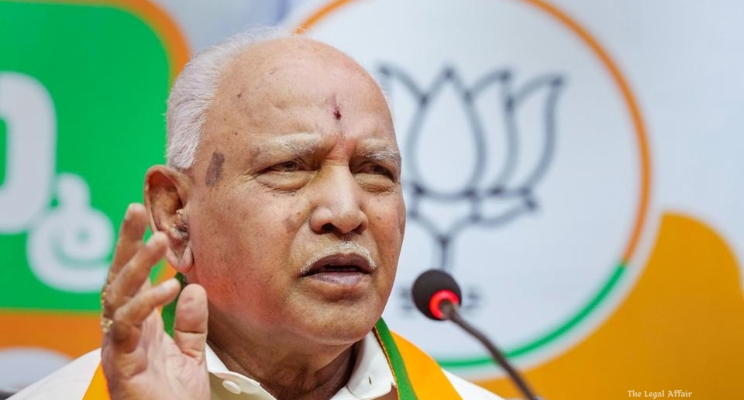
In a significant development on February 7, 2025, the Karnataka High Court delivered a judgment partly allowing the plea of former Chief Minister BS Yediyurappa, who sought to quash a POCSO (Protection of Children from Sexual Offences) case filed against him. The case was based on allegations made by the mother of a 17-year-old girl, who claimed that Yediyurappa had sexually assaulted her daughter during a meeting at his residence in Bengaluru in February of the previous year. The court, while setting aside the trial court’s order of taking cognizance of the offence, upheld the ongoing investigation, including the charges filed in the final report. It remitted the matter back to the trial court for further proceedings but emphasized that all the contentions of both parties remained open. Notably, Yediyurappa’s plea for anticipatory bail was granted by the court. The court’s decision to remit the matter back to the trial court reflects a delicate balance between addressing the serious nature of the allegations and the procedural concerns raised by the accused. The judgment was pronounced by Justice M Nagaprasanna after a thorough hearing of the arguments presented by both sides. The court had reserved its order on January 17, 2025, following detailed submissions from the parties involved.
Arguments of Both Sides:
Yediyurappa, through his counsel Senior Advocate C.V. Nagesh, opposed the filing of the POCSO case and sought the quashing of the cognizance order passed by the trial court. Nagesh contended that the complaint, which led to the registration of the case, was filed after a delay of one and a half months, raising serious doubts about the veracity of the allegations. He argued that the complainant’s behaviour, including her visit to Yediyurappa’s residence and subsequent interactions with him, cast suspicion on the claims of sexual assault. Nagesh further emphasized that the complainant had not reported the incident to the police immediately and that the entire scenario was highly improbable. He questioned the complainant’s motive for visiting Yediyurappa after the alleged assault, suggesting that her conduct could be indicative of ulterior motives rather than a genuine complaint of sexual assault.
Additionally, Nagesh raised concerns about the legal presumption under Section 29 of the POCSO Act, which mandates a presumption of guilt for the accused unless proven otherwise. He argued that such a presumption could only be applicable during the trial stage and not at the stage of quashing or considering the charges. He further submitted that since the case was in its initial stages, the prosecution should not rely on the presumption of guilt before the evidence was thoroughly examined. Nagesh cited Section 30 of the POCSO Act to support his argument, emphasizing that the presumption of culpability under the Act arises only during the trial when the court assesses the evidence and the mental state of the accused. According to Nagesh, the trial court had not applied its judicial mind properly when taking cognizance of the case and there was no sufficient evidence to proceed further at this stage.
Nagesh also questioned the timing of the complainant’s actions. He pointed out that after the alleged incident, the complainant and her daughter visited Yediyurappa’s house again and even recorded their interaction with him on mobile phones, a fact that he claimed was inconsistent with the behaviour of someone who had suffered a traumatic event like sexual assault. He further questioned why the complainant did not immediately file a police complaint or report the incident to any authority, such as the police commissioner, during the time they interacted after the alleged assault. This delay, according to Nagesh, was a significant factor that raised doubts about the authenticity of the complaint.
On the other hand, the prosecution, represented by Special Public Prosecutor Professor Ravivarma Kumar, argued that the seriousness of the charges warranted a presumption of guilt under Section 29 of the POCSO Act. Kumar emphasized that the law presumes the accused to be guilty unless the defence can provide evidence to the contrary, which makes it crucial to proceed with the investigation and trial. He pointed out that POCSO cases are treated as heinous crimes, and the law provides safeguards to ensure that perpetrators are brought to justice. Kumar cited forensic reports that corroborated the mobile phone recordings, which contained conversations between Yediyurappa and the complainant. These, he argued, provided strong evidence of the accused’s involvement in the alleged crime.
Kumar further referred to the FSL (Forensic Science Laboratory) reports which validated the authenticity of the mobile phone recordings, reinforcing the prosecution’s stance. He stated that the prosecution had a strong case against Yediyurappa and that it was premature to quash the charges based on the arguments presented by the defence. He also pointed out that Section 29 of the POCSO Act shifted the burden of proof to the accused, requiring them to rebut the presumption of guilt once the case was established.
The prosecution’s reliance on the legal presumption of guilt under POCSO law highlighted a fundamental difference in the approach of both parties. The defence sought to undermine the credibility of the complainant and the evidence presented by the prosecution, while the prosecution, on the other hand, relied on the statutory presumptions and forensic evidence to argue for the continuation of the legal process. The court, after hearing both sides, decided to strike a balance by setting aside the trial court’s cognizance order but allowing the investigation and final report to remain intact. The court also remitted the case back to the trial court for further examination, leaving open the opportunity for the parties to present their respective arguments at an appropriate stage of the trial.
Court’s Judgment:
In its judgment, the Karnataka High Court acknowledged the seriousness of the charges and the importance of upholding the integrity of the judicial process. Justice M Nagaprasanna, in delivering the judgment, observed that the decision to take cognizance of the offence by the trial court was flawed, but the investigation and the final report filed by the CID (Criminal Investigation Department) remained unaffected. The court emphasized that the matter needed to be sent back to the trial court for further proceedings, ensuring that both parties had an opportunity to present their cases in full.
While allowing Yediyurappa’s plea for anticipatory bail, the court clarified that this did not preclude the investigation from continuing. The court emphasized that all contentions raised by the parties would be considered at the appropriate stage, and the trial court would examine the evidence presented before it. The court also made it clear that the presumption under Section 29 of the POCSO Act, which presumes guilt unless rebutted, would be applicable at the trial stage and not before. It also noted that the defence would have the opportunity to challenge the prosecution’s evidence and present a rebuttal during the trial.
Justice M Nagaprasanna further directed that the matter be remitted to the trial court to ensure a fair and impartial hearing, where the evidence would be examined in its entirety. The court also indicated that any procedural irregularities in the trial court’s order taking cognizance would be rectified in the subsequent hearings. The judgment was seen as a step toward ensuring that justice was served while safeguarding the rights of the accused and ensuring that the law was followed meticulously.
The court also left the door open for Yediyurappa to pursue any other legal remedies available to him at the appropriate stage and forum. The court’s decision to set aside the cognizance order and allow the investigation to proceed highlights the importance of due process in criminal law, especially in cases involving serious allegations like those under the POCSO Act. This judgment serves as a reminder that while the presumption of guilt under POCSO cases is a significant legal principle, it must be applied by the procedural stages and only after a thorough examination of the evidence.
In conclusion, the Karnataka High Court’s ruling represents a careful and balanced approach to the complexities of a POCSO case involving a high-profile individual. By remitting the matter back to the trial court, the court ensured that the legal process would continue without dismissing the case prematurely, thereby upholding the rights of both the accused and the complainant. This decision, while granting anticipatory bail to the accused, also reaffirms the commitment to justice, allowing both sides to present their arguments fairly and transparently.