


Introduction:
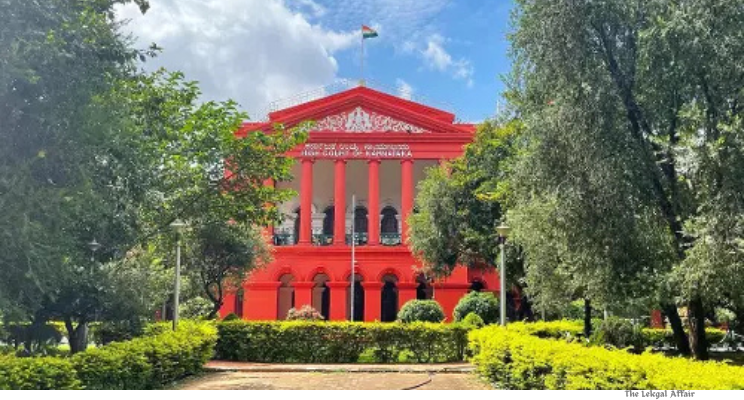
The Karnataka High Court, in Ullas Kotian Yane Ullas K V v. Government of Karnataka & Others, reaffirmed that a sibling claiming exclusive ownership of property based on a Will cannot have their name mutated in revenue records unless the Will is substantiated and proved in a competent civil court. Justice Sachin Shankar Magadum, while dismissing the writ petition, upheld the Deputy Commissioner’s order, which reversed the Assistant Commissioner’s decision and directed the Tahsildar to restore the original owner’s name—Kamalamma, the petitioner’s mother. The ruling underscores the principle that revenue courts lack jurisdiction to determine the genuineness of a Will, which must be decided through civil proceedings.
Arguments of Both Sides:
The petitioner, Ullas Kotian Yane Ullas K V, contended that the Deputy Commissioner erred in reversing the Assistant Commissioner’s order, which had allowed the mutation based on the alleged Will in his favour. He relied on the Supreme Court’s decision in Suraj Bhan & Others v. Financial Commissioner & Others (2007) 6 SCC 186 and a Karnataka High Court division bench ruling in W.A.No.4429/2011, arguing that mutation should be granted based on the Will. The petitioner insisted that since a partition suit was already pending, the mutation should stand until final adjudication.
The State, represented by AGA B.P. Radha, opposed the petition, arguing that revenue authorities cannot assess the validity of a Will in mutation proceedings. Relying on the full bench ruling in C.N. Nagendra Singh v. Special Deputy Commissioner, Bengaluru, ILR 2002 KAR 2750, the State asserted that unless the Will is proved in a civil court, mutation cannot be granted based solely on it. Furthermore, the respondent sibling, who had challenged the mutation, argued that since both parties were tracing their inheritance rights through their mother, the mother’s name should remain in revenue records until the dispute is fully resolved in court.
Court’s Judgment:
The High Court emphasized that whether a Will is registered or not, it does not automatically confer ownership rights until proven. The court held that mutation cannot be granted merely based on an unverified Will, especially when other legal heirs are contesting inheritance claims. It ruled that the correct approach was to retain the deceased owner’s name in revenue records until a competent civil court decides the rights of the parties. Accordingly, the court dismissed the petition as devoid of merit, reinforcing the principle that mutation proceedings are not the forum for adjudicating testamentary claims.