


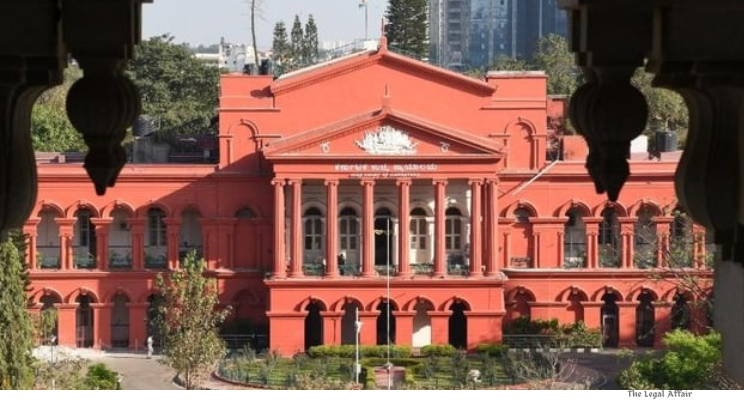
Introduction:
In a significant ruling, the Karnataka High Court set aside a notification issued by the State Government in 2023, which drastically reduced the educational assistance provided to children of registered construction workers pursuing higher education. The petition was filed by Amritha M and Ankitha H, daughters of construction workers, who were pursuing their respective graduate and postgraduate studies. Under a 2021 notification, children of registered construction workers were entitled to educational assistance of ₹35,000 per semester. However, a subsequent notification issued on 30th October 2023 reduced this amount to a mere ₹10,000 per semester for graduate and postgraduate courses. The petitioners, whose applications for assistance had been turned down due to this reduction, challenged the decision in the High Court. The petitioners argued that the amendment was not only unfair but also contrary to the legal rights of the children of construction workers who had been promised financial assistance to further their education.
Arguments of Both Sides:
The petitioners, represented by advocates Aditya Chatterjee and Akshita Goyal, contended that the drastic reduction in educational assistance was unjustified and contrary to the principles of social welfare. They argued that the reduction amounted to a regressive step, undermining the state’s obligation to uplift the children of construction workers, a vulnerable section of society. They further pointed out that despite the available funds in the Karnataka Building and Other Construction Workers Welfare Board (Board), the amount earmarked for education had been significantly slashed, thereby denying deserving students access to financial support for their education. The petitioners also highlighted the mismanagement of the funds, accusing the Board of overspending on administrative expenses while underspending on welfare schemes. They pointed to the ₹6,700 crore fund held by the Board, which had been placed in fixed deposits instead of being utilized for the welfare of construction workers and their families, as required by law.
On the other hand, the state government, represented by AAG Prathima Honnapura and senior counsel M.R.C. Ravi, defended the decision, arguing that the reduced amount of educational assistance was a result of financial constraints. The state asserted that the funds collected for the welfare of construction workers were limited and that the Board had to make difficult decisions to allocate the available resources. The government also claimed that the funds had been utilized for various welfare schemes, including the MGNREGA scheme and the establishment of the Indira Canteen, which had been aimed at improving the welfare of workers and their families. While the government admitted that there were issues with the funds’ utilization, it argued that the reduction in educational assistance was necessary to ensure that the welfare schemes could be sustained.
Court’s Judgment:
After carefully considering the arguments, the Karnataka High Court delivered a scathing judgment against the state government. Justice M. Nagaprasanna, delivering the opinion of the Court, observed that the notification reducing the educational assistance was “blatantly contrary to law” and could not be justified. He noted that the state’s action of cutting the educational assistance for the children of construction workers was not only regressive but also discriminatory. The Court emphasized that the rights of the poor, especially those of construction workers and their families, should never be stifled by the state. The Court quoted the famous adage, “Educating a man is educating an individual; educating a woman is educating a generation,” underlining the importance of education in empowering the children of construction workers, particularly women. The Court also highlighted the importance of progressive steps in improving the lives of marginalized communities rather than taking regressive measures that would only worsen their socio-economic conditions.
The Court further observed that there was no justification for reducing the educational assistance amount, as the Karnataka Building and Other Construction Workers Welfare Fund, which stood at ₹6,700 crore, was more than sufficient to meet the financial needs of the children of registered construction workers. The Court noted that the fund was being mismanaged, with large sums invested in fixed deposits instead of being utilized for the intended welfare purposes. The Court pointed to the Audit Report, which revealed shocking discrepancies in the spending patterns of the Board. It criticized the Board for its failure to apply for tax exemptions, resulting in a tax liability of ₹3,548 crore, which could have been avoided. The Court also emphasized that the interest generated from the fund could easily cover the entire education expenses of the children of registered construction workers, and therefore, the claim of insufficient funds was “absolute gibberish.”
In its ruling, the Court directed the state government and the Karnataka Building and Other Construction Workers Welfare Board to continue disbursing educational assistance to the applicants for the financial years 2020-21, 2021-22, and 2022-23, without any reduction in the amounts as per the previous notifications. The Court also ordered that applications from similarly situated individuals should be processed by the earlier policy and that the state government should not force citizens to approach the court for identical reliefs. The Court further mandated that the Comptroller and Auditor General of India (CAG) should audit the funds of the Board within three months and submit the report to the Court.
The judgment was a strong rebuke to the state government and the Karnataka Building and Other Construction Workers Welfare Board for their neglect of the welfare of construction workers and their children. The Court held that the state should not view the funds of the Board as its property, to be diverted for other purposes, but as funds that belonged to the construction workers and their families, who had a constitutional right to access these funds for their welfare.