


Introduction:
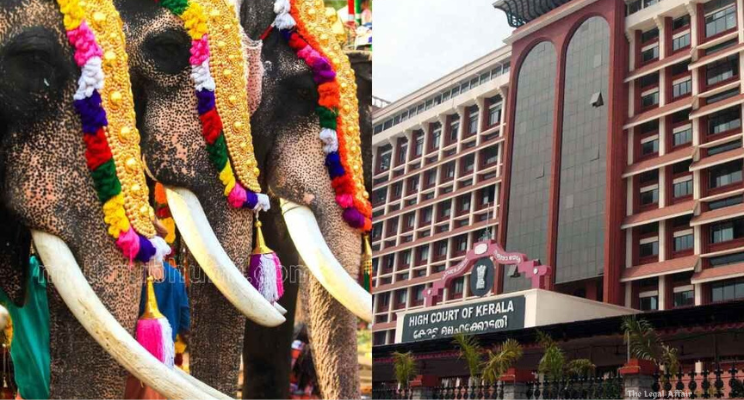
In the case In Re Captive Elephants v UOI (WP(C) 31520 of 2024), the Kerala High Court has called for a report from the Malappuram District Collector regarding an elephant-related incident during the BP Angadi Nercha at Tirur on January 8, which resulted in the injury of 29 individuals and the death of one. The Division Bench, consisting of Justice A. K. Jayasankaran Nambiar and Justice Gopinath P., directed the report to include details such as the nature of the incident, the permissions sought by the organizing committee, and the specific conditions for the use of elephants at the event. This incident has raised concerns about public safety during temple festivals and the enforcement of safety protocols for captive elephants. The court’s involvement highlights a deeper issue regarding the regulation of elephants in such public events, especially when previous directions issued by the High Court were stayed by the Supreme Court.
Arguments of Both Sides:
The petitioner, in this case, has raised concerns about the safety risks associated with the use of elephants in public events like temple festivals, particularly following the tragic incident where the elephant reportedly ran amok, causing injury and death. The petitioner is seeking clarity on the distance that should be maintained between the elephants and the public during such events to prevent similar incidents in the future. Earlier, the Kerala High Court had directed that a minimum distance of 3 meters be maintained between elephants and participants, with an 8-meter gap between the elephants and the public. However, this direction was stayed by the Supreme Court, which observed that the High Court’s directions contradicted the Kerala Captive Elephants (Management and Maintenance) Rules, 2012. The Apex Court’s stay raised questions about the authority of the High Court in framing rules that could override existing regulations.
In response, the State, represented by the authorities concerned, contended that the Kerala Captive Elephants (Management and Maintenance) Rules, 2012, already provide a framework for managing captive elephants, including the stipulation of a “sufficient distance” between elephants and the public. However, the court pointed out the ambiguity of what constitutes a “reasonable” or “sufficient” distance, noting that the rule did not provide specific guidelines on this matter. Justice A. K. Jayasankaran Nambiar remarked that the rule-making authority lies with the State, and it is their responsibility to clarify what constitutes a reasonable distance between elephants and the public. The bench emphasized that it was not the court’s role to prescribe such distances, but rather the State’s duty to specify these measures under the existing legal framework.
Court’s Judgment:
The Kerala High Court’s order reflects an ongoing concern about public safety in the context of elephant-related events, especially in temple festivals. The Division Bench directed the Malappuram District Collector to submit a detailed report regarding the incident that occurred during the BP Angadi Nercha, which saw the elephant running amok, injuring several individuals and killing one. The report is to include critical details such as the permissions sought by the organizers, the conditions for using elephants at the event, and whether the event adhered to the relevant legal framework for managing elephants.
The court also made significant observations regarding the ambiguity in the Kerala Captive Elephants (Management and Maintenance) Rules, 2012. The rules stipulate that a “sufficient distance” should be maintained between elephants and the public, but the term “sufficient” remains undefined. This vagueness has led to confusion about the appropriate safety measures. Justice Nambiar questioned the State’s failure to clarify the distance requirements, pointing out that it is the rule-making authority’s responsibility to specify such details clearly, rather than leaving the matter ambiguous. The court highlighted that the State should take proactive steps to address this issue and not allow ambiguity to persist, as it could compromise public safety.
While the Supreme Court had stayed the High Court’s earlier orders regarding specific distance requirements, the Kerala High Court, in its latest hearing, reiterated that the State must take action to resolve the ambiguity in the existing rules. The court remarked that it was not the judiciary’s role to prescribe the specific distances, but rather the responsibility of the State, which holds the rule-making power. The court’s comments reflect its expectation that the State will act to provide clear guidelines for the safe use of elephants in public events, with a focus on minimizing risks to public safety.