


Introduction:
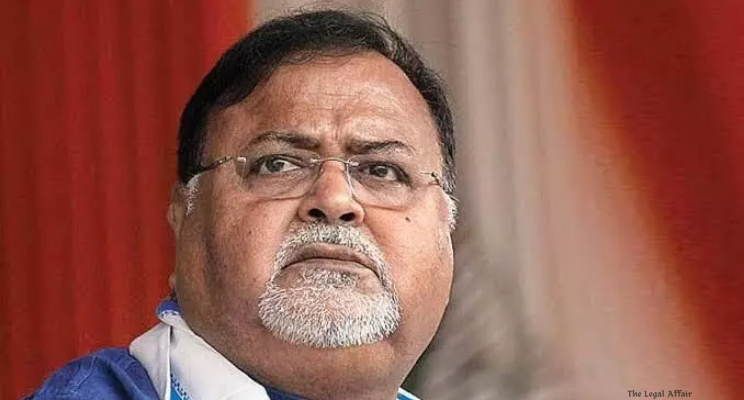
In a significant development, the Calcutta High Court denied bail to former Education Minister Partha Chatterjee and four co-accused—Dr. Subiresh Bhattacharjee, Kalyanmoy Gangopadhyay, Ashok Saha, and Shanti Prasad Sinha—in connection with the infamous cash-for-jobs recruitment scam. The case, involving allegations of corruption and economic crimes, has drawn considerable attention due to its far-reaching implications. Earlier, a division bench delivered a split verdict on the bail applications, leading to a fresh adjudication by Justice Tapabrata Chakraborty, who ultimately sided with Justice Apurba Sinha Ray’s earlier dissenting opinion to reject the bail pleas. The decision underscores the judiciary’s approach to addressing serious economic offences and sets a benchmark for evaluating bail applications.
Arguments of Both Sides:
The petitioners contended that they had been incarcerated for an extended period and sought parity in bail with co-accused like Prasanna Kumar Roy and Jiban Krishna Saha, whose bail had been granted earlier. They argued that there was no direct evidence implicating them in the scam and emphasised their willingness to cooperate with the ongoing investigation. The defense also pointed out that prolonged custody was unwarranted in light of the principle of personal liberty. However, the prosecution, represented by the Central Bureau of Investigation (CBI), vehemently opposed the bail applications, asserting that the accused were the masterminds behind the scam. They alleged that the petitioners systematically manipulated recruitment processes to favour certain candidates in exchange for bribes. The prosecution emphasised the gravity of economic offences, arguing that these crimes transcend private wrongs and have far-reaching societal consequences. Additionally, the CBI highlighted the influence wielded by the accused, cautioning that their release could lead to tampering with evidence, intimidation of witnesses, and further disruption of justice.
Court’s Judgment:
Justice Tapabrata Chakraborty, while rejecting the bail applications, delivered a detailed judgment underscoring the seriousness of economic offences and the necessity of judicial caution in such matters. He observed that “parity cannot be the sole ground for granting bail”. He emphasized the importance of evaluating the role of each accused in the incident, their influence, and the potential impact on the investigation. Drawing from Justice Apurba Sinha Ray’s dissenting opinion, the Court noted that the petitioners were not merely passive participants but masterminds of the scam, orchestrating its execution to further their illicit objectives. Justice Chakraborty remarked that offences involving economic crimes and corruption require a distinct approach due to their wide-ranging impact on society, extending beyond individual victims. He further stressed that the judiciary could not act as a “silent or mute spectator” in the face of such ingenious criminal endeavours. The Court highlighted that the accused’s positions of influence posed a tangible risk of witness intimidation and evidence tampering. Consequently, the bail applications were dismissed, reinforcing the judiciary’s stance on holding individuals accountable in economic crimes and corruption cases.