


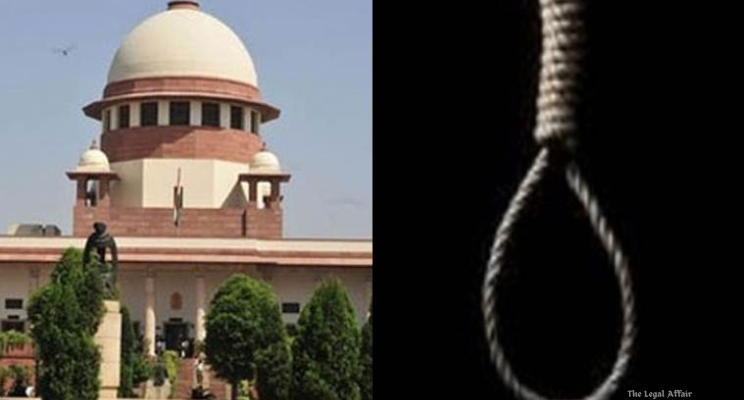
Introduction:
In the case State of Maharashtra and Ors. v. Pradeep Yashwant Kokade and Anr. [Crl.A. No. 2831-2832/2023], the Supreme Court addressed significant issues surrounding administrative and judicial delays in processing mercy petitions and issuing execution warrants. The case involved two convicts, Purshottam Borate and Pradeep Kokade, sentenced to death for the gang rape and murder of a Pune BPO employee in 2007. Upholding the Bombay High Court’s 2019 decision, the Supreme Court commuted their death sentences to life imprisonment with a fixed term of 35 years. The Court’s observations emphasized that delays spanning over three years, attributable to administrative inefficiencies and procedural lapses, violated the convicts’ fundamental rights under Article 21 of the Constitution. This landmark judgment sheds light on systemic flaws in the justice system, advocating for prompt and efficient handling of death penalty cases while balancing the rights of victims and convicts.
Arguments of Both Sides:
The State of Maharashtra argued that the delays in processing the mercy petitions and issuing execution warrants were not significant enough to warrant commutation of the death sentence. The State contended that the Governor and the President, as constitutional functionaries, acted within a reasonable timeframe. It further claimed that any delay caused by administrative lapses or prolonged correspondence did not amount to a violation of the convicts’ rights under Article 21 of the Constitution. The prosecution also emphasized the heinous nature of the crime, highlighting the brutality of the act, which justified the imposition of the death penalty. On the other hand, the defense argued that the inordinate delays, particularly the unexplained three-year gap, were attributable to the negligence of the administrative machinery and the judiciary. They asserted that these delays caused mental agony to the convicts, amounting to a violation of their rights under Article 21. The defense highlighted the Supreme Court’s established jurisprudence, which holds that inordinate and unjustified delays in carrying out death sentences are grounds for commutation to life imprisonment. They urged the Court to prioritize procedural fairness and uphold the dignity of individuals, even those convicted of grave offenses.
Court’s Judgment:
The Supreme Court upheld the Bombay High Court’s judgment, observing that systemic delays in processing mercy petitions and issuing execution warrants violated the convicts’ fundamental rights under Article 21. The bench, comprising Justices Abhay Oka, Ahsanuddin Amanullah, and Augustine George Masih, criticized the casual and negligent approach of the State Government, the prison authorities, and the Sessions Court. The Court meticulously examined the timeline of delays, noting that the Governor took five months to process the mercy petition, with no valid justification provided. Similarly, the Ministry of Home Affairs and the President’s Secretariat engaged in prolonged and unnecessary correspondence, further delaying the decision. Most notably, the Sessions Court took nearly two years to issue execution warrants despite being informed of the rejection of the mercy petitions. The Court held that these delays, spanning nearly four years in total, were entirely avoidable and attributable to administrative inefficiency rather than constitutional functionaries. It emphasized that the Executive must act promptly in handling mercy petitions, and courts must proactively ensure that death sentences are carried out without undue delay. The judgment highlighted the need to balance the rights of victims and convicts, underscoring that while victims deserve justice, the enforcement of capital punishment must adhere to constitutional safeguards. The Court also laid down detailed procedural guidelines to streamline the processing of mercy petitions and execution of death sentences, ensuring adherence to principles of justice and fairness.