


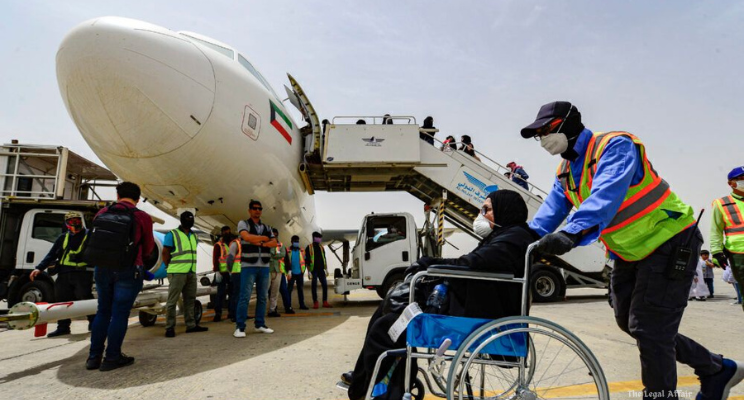
Introduction:
On November 12, 2024, the Supreme Court of India disposed of a writ petition filed by Arushi Singh, a person with benchmark disability, who raised concerns over the indignities she faced at the Kolkata airport. Singh, a graduate of the National Law Institute University, Bhopal, and a holder of an LL.M. from the National University of Singapore, approached the Court after an incident that occurred on January 31, 2024, when she was allegedly subjected to humiliating treatment by the Central Industrial Security Force (CISF) personnel during her security screening. Singh, who requires a wheelchair for mobility, was reportedly asked multiple times to stand up during the screening process, despite explaining her disability. She alleged that the airport security personnel showed insensitivity and failed to provide the necessary assistance, leading her to feel disrespected and deprived of her dignity.
The petition was filed under the Rights of Persons with Disabilities Act, 2016, and other relevant aviation accessibility guidelines. In the petition, Singh sought the enforcement of mandatory regulations to ensure that specially-abled individuals and those requiring assistance, such as the elderly or injured, are treated with respect and dignity at airports across India. Singh specifically sought a directive from the Union of India, the Airports Authority of India, and CISF to adhere to the provisions of the Rights of Persons with Disabilities Act, 2016, and other aviation guidelines designed to improve accessibility for disabled passengers.
Arguments of the Petitioner:
Arushi Singh’s petition outlined her painful experience at the Kolkata airport where she had to wait for over 20 minutes for assistance and then faced humiliating treatment during security screening. Despite informing the CISF personnel about her disability, she was repeatedly asked to stand up, which caused her significant distress. Singh contended that the conduct of the airport security personnel was not only insensitive but also a clear violation of her fundamental rights under the Constitution, which guarantees the right to dignity and equality.
In her petition, Singh argued that the existing guidelines laid down by the government for the treatment of specially-abled passengers at airports were not being followed effectively, which resulted in her mistreatment. She referred to the Rights of Persons with Disabilities Act, 2016, which mandates equal rights and access to public spaces, including airports. Singh also invoked the Accessibility Standards and Guidelines for Civil Aviation 2022 and the Series M of Civil Aviation Requirements, 2014, both of which emphasize the need for sensitivity and accessibility for differently-abled passengers. Singh sought mandamus from the Court to direct the respondents to strictly implement these regulations to ensure such incidents do not occur in the future.
Singh further requested that the guidelines be made mandatory to ensure that future passengers with disabilities, especially those requiring wheelchairs, are treated with respect and dignity. She also suggested that the guidelines should not be limited to wheelchair users but should extend to elderly and injured passengers who require wheelchair assistance. Additionally, Singh proposed that airport staff undergo regular sensitization training to better assist specially-abled passengers.
Arguments of the Respondents:
The Union Government, represented by Additional Solicitor General Aishwarya Bhati, acknowledged the importance of ensuring that persons with disabilities receive adequate assistance at airports. However, the Union’s defence was centred around the argument that the guidelines, although present, needed to be more effectively implemented and integrated into airport operations. They proposed several measures to improve the accessibility and treatment of differently-abled passengers at airports, including real-time updates on wheelchair availability, mandatory mechanized wheelchairs for solo travellers, and integration of disability-related data into ticket booking systems. The Union also suggested coding boarding passes with information about the nature and severity of the passenger’s disability to facilitate better assistance.
While agreeing with the need for better implementation of guidelines, the Union suggested that practical challenges existed in the smooth execution of these regulations across all airports in the country. They also recognized the need for staff training, both in terms of security procedures and the necessary sensitivity towards specially-abled individuals. The Union proposed that training sessions for airport staff be made mandatory and that airports introduce specialized kiosks for boarding pass collection with voice recognition and response technology to assist differently-abled travellers.
The Union emphasized that while the implementation of these guidelines was crucial, it required time and collaboration with various airport authorities, including the Airports Authority of India (AAI) and the CISF, to ensure that the necessary infrastructure and training were in place.
Court’s Judgment:
The bench, comprising Justices D.Y. Chandrachud and J.B. Pardiwala, considered the arguments of both parties and the suggestions put forward by the Union Government. The Court emphasized that the treatment of differently-abled passengers at airports should be guided by the principles of dignity, equality, and respect, in line with constitutional guarantees. The Court also highlighted that the Rights of Persons with Disabilities Act, 2016, mandates that persons with disabilities should not face discrimination and should be provided with the necessary facilities and assistance in public spaces, including airports.
Justice Chandrachud noted that the issues raised in the petition required careful consideration and that the guidelines laid out by the Union of India for the treatment of specially-abled passengers were crucial to ensuring dignity and respect. The Court recognized the importance of a collaborative approach involving various stakeholders, including the Union Government, CISF, AAI, and other airport authorities, to implement these guidelines effectively.
The Court agreed with the petitioner’s suggestions to make the guidelines mandatory and extended them to include not only wheelchair users but also elderly and injured passengers requiring assistance. The Court also endorsed the Union’s suggestion to integrate real-time wheelchair availability and mechanized wheelchairs at airports, which would significantly improve the accessibility and independence of differently-abled passengers.
Furthermore, the Court acknowledged the importance of sensitizing airport staff, including CISF personnel, to the needs and challenges faced by specially-abled passengers. The Court directed that staff undergo regular training to ensure they were adequately prepared to assist such passengers with compassion and respect.
Finally, the Court disposed of the petition, directing that the Union Government take immediate steps to enforce the guidelines with a focus on ensuring dignity and accessibility for differently-abled passengers. The Court also made it clear that these guidelines should be mandatory and not merely advisory, with an emphasis on practical implementation at airports across the country.
Conclusion:
The Supreme Court’s ruling marks a significant step towards improving the treatment of differently-abled passengers at airports, ensuring they are treated with dignity and respect. The Court’s decision to make the Union Government’s guidelines mandatory, along with its emphasis on staff training and improved infrastructure, sets an important precedent for accessibility in public spaces. By focusing on both practical solutions, such as real-time wheelchair availability and mechanized assistance, and the human element, such as sensitizing airport staff, the Court has paved the way for a more inclusive and respectful experience for differently-abled passengers. This ruling is a powerful reminder of the need for continuous efforts to ensure equal treatment and accessibility for all citizens, regardless of their physical abilities.