


Introduction:
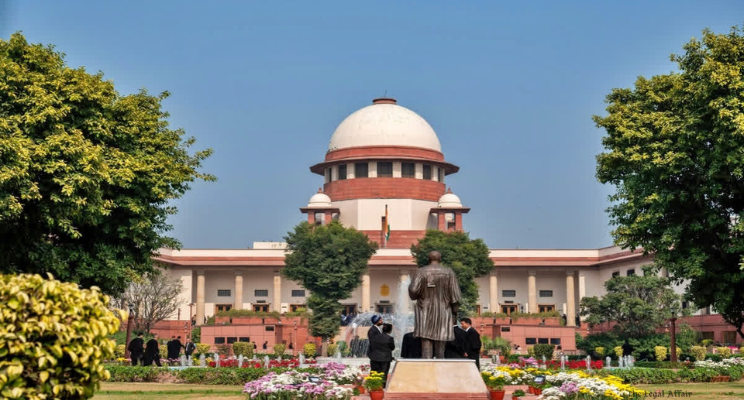
In the case of Jayanarayan Mishra v. The State of Odisha, the Supreme Court of India deliberated on a significant issue of anticipatory bail concerning Jayanarayan Mishra, a BJP Member of the Legislative Assembly (MLA). Mishra was accused of physically assaulting a woman police officer during a public protest in 2023. Following the recent political shift in Odisha’s government from the Biju Janata Dal (BJD) to the Bharatiya Janata Party (BJP), the stance of the State in this matter had softened, drawing the Supreme Court’s concern over potential bias in favour of the accused.
A bench comprising Justices Hrishikesh Roy and SVN Bhatti presided over the hearing and ultimately dismissed Mishra’s anticipatory bail plea, citing the potential prejudice such leniency could introduce into the investigation. Notably, the Court underscored the need for impartiality in a government function, particularly in law enforcement, with Justice Roy emphatically stating that “the colour of the uniform of the police officer does not change with the change of government.” This comment resonated deeply, emphasizing that shifts in political leadership should not alter the integrity of the justice system or influence how officers in uniform uphold the law.
For the Anticipatory Bail (Petitioner’s Argument):
Advocate for Mishra argued for granting anticipatory bail on the grounds of political motivations, claiming that the arrest was intended to malign his reputation and limit his political influence. The defence cited Mishra’s prominent position within the BJP and highlighted the political sensitivity of the case, alleging that the initial charge was potentially instigated by the prior BJD-led government. Additionally, Mishra’s counsel stressed his willingness to cooperate fully with the investigation, arguing that the anticipatory bail would not impede the process.
Against the Anticipatory Bail (State of Odisha’s Argument):
Interestingly, the State of Odisha, represented by Advocate Samapika Biswal, adopted an uncharacteristically lenient approach, suggesting the Court merely required Mishra’s cooperation in the investigation instead of outright rejecting his plea. This stance surprised the bench, as previous affidavits submitted by the State during the tenure of the BJD government had adopted a hard-line position, outlining Mishra’s alleged prior transgressions and strongly opposing anticipatory bail. The bench’s reaction to the changed posture reflected concerns that this could undermine the neutrality expected in judicial matters, as Justice Bhatti pointedly remarked on whether the State’s counsel intended this to be construed as a concession favouring Mishra.
The apparent concession did not go unnoticed, with Justice Bhatti expressing visible disappointment at the counsel’s stance, and Justice Roy reprimanding the perception of bias by reinforcing that police accountability and uniform enforcement of the law should remain unaffected by political transitions.
Court’s Judgment and Observations:
After evaluating both sides, the Court found that granting anticipatory bail to Mishra could unduly influence the ongoing investigation, which required unbiased scrutiny. The bench dismissed the anticipatory bail plea, emphasizing that it was crucial to maintain the public’s faith in the judiciary, especially in politically sensitive cases. The bench also reiterated that while the Odisha government had changed, the essence of the judicial and law enforcement system must remain constant and unaffected by the political tides. Justice Roy’s poignant remark, “The colour of the uniform of the police officer does not change with the change of government,” underscored the fundamental principle of non-partisan justice.
The Court’s decision serves as a reminder that judicial integrity should be upheld irrespective of political influences, particularly in cases involving public officials. By declining the anticipatory bail, the Supreme Court reaffirmed its commitment to a fair investigation, signifying that while governments may change, the core values of the judiciary must remain immutable.