


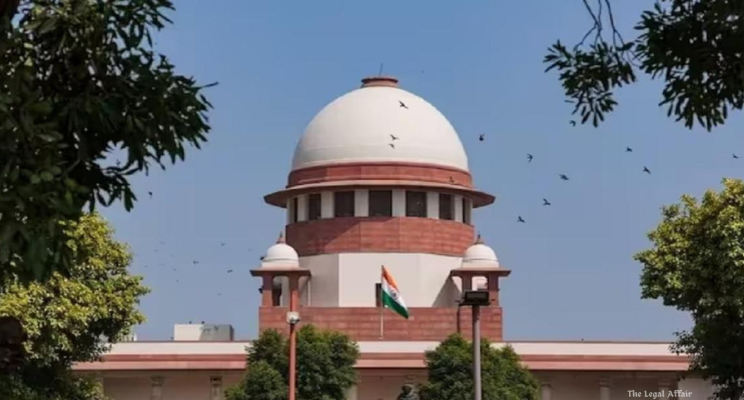
Introduction:
In a significant judicial rebuke, the Supreme Court of India recently warned the Sentence Review Board of the Union Territory of Puducherry for neglecting to address a remission plea. This case highlights the court’s resolve to enforce adherence to its orders, particularly in matters concerning personal liberty. The petitioner, Karuna alias Manoharan, has served over 24 years of a life sentence for murder and sought remission based on the Supreme Court’s prior order, which granted relief to a co-accused in January 2024. The Sentence Review Board, however, failed to consider his plea as mandated by the court in August 2024, compelling the bench to consider contempt proceedings against the Board members, including the Union Territory’s Home Minister.
The matter was heard by a bench comprising Justice Abhay S. Oka and Justice Augustine George Masih, who were visibly displeased by the Board’s lack of compliance. The court issued a warning, expressing that the Home Minister and other members could be summoned for contempt proceedings if the order of the Supreme Court was disregarded so lightly.
Petitioner’s Argument:
The petitioner’s counsel emphasized that the Sentence Review Board’s failure to adhere to the Supreme Court’s instructions was a clear violation of constitutional rights. Karuna had already served over two decades in prison, and his case for remission became stronger after his co-accused, Satish, was granted remission by the Supreme Court. The petitioner argued that the Supreme Court’s directive to the Board in August 2024 explicitly required a reconsideration of his case in light of the January 25, 2024, order. By not discussing or even referencing this order, the Board was seen to have ignored its responsibilities.
The counsel further argued that the non-compliance demonstrated a disregard for judicial authority and the values of the justice system, infringing on the petitioner’s right to a fair review of his plea. Additionally, the petitioner’s prolonged incarceration underscored the need for timely compliance with judicial directions, as his extended imprisonment reflected both procedural and constitutional failures on the part of the Board.
Respondent’s Argument:
In response, the Union Territory’s legal representatives contended that the Sentence Review Board did not intentionally ignore the Supreme Court’s direction. They argued that certain procedural issues delayed the Board’s decision-making process and that the petitioner’s remission application required careful consideration of his conduct in prison and other factors relevant to public safety. The respondents also claimed that the Board had considered other similar cases and was working on implementing a streamlined process for remission decisions.
However, the Supreme Court found these arguments insufficient. The respondent’s counsel struggled to justify why the Board’s recent meeting minutes lacked any reference to the January order. This omission was critical, as the August directive explicitly mandated the Board to revisit the petitioner’s plea with the January 2024 order as a basis.
Court’s Judgement:
The Supreme Court’s response was unequivocally stern. The bench observed that the Sentence Review Board had neglected its duties by failing to adhere to the specific directions of the court. The bench noted that the Board’s conduct demonstrated a prima facie violation of its order dated August 27, 2024, as the Board did not consider the petitioner’s case in the light of the relief granted to his co-accused. Justice Oka and Justice Masih stressed that such disregard for a Supreme Court order could not be tolerated, especially when it involved the fundamental rights of an individual who had been imprisoned for over 24 years.
The court’s examination of the Sentence Review Board’s recent meeting minutes revealed a conspicuous absence of discussion about Karuna’s remission application or reference to the January 25 order. The justices remarked that this oversight was unacceptable, given that the court had explicitly instructed the Board to reconsider Karuna’s plea based on the January decision. Consequently, the bench directed the Inspector General of Prisons, who serves as the Member Secretary of the Sentence Review Board, to submit an affidavit by January 6, 2025, explaining the reasons for the Board’s failure to comply.
In response to the petitioner’s prolonged imprisonment and the Board’s non-compliance, the Supreme Court granted interim bail to Karuna, underscoring its commitment to uphold justice and protect individual rights. The court ordered the petitioner’s release on temporary bail, directing that he be presented before the trial court, which would grant him bail under appropriate conditions after considering the prosecution’s input on the terms of release. This interim relief provides Karuna with temporary freedom until the next hearing, scheduled for January 10, 2025.