


Introduction:
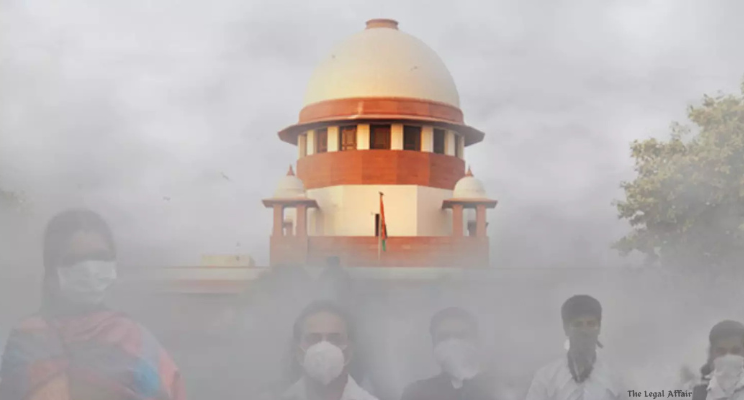
The Supreme Court of India has issued stern directives to curb air pollution in Delhi-NCR, emphasizing the urgent need to implement and enforce the ban on firecrackers. The case, a part of the ongoing MC Mehta v. Union of India litigation concerning environmental protection, focused on the lack of enforcement of a firecracker ban during Diwali, which has worsened Delhi’s air quality. A bench led by Justices Abhay S. Oka and A.G. Masih observed that the right to a pollution-free environment is a fundamental right protected under Article 21 of the Indian Constitution, highlighting that no religion endorses activities contributing to pollution. Addressing the Delhi Police and the Delhi Government, the Supreme Court voiced disappointment over the delayed and ineffective implementation of the firecracker ban imposed by the Delhi Government on October 14.
Arguments by the Delhi Government and Delhi Police:
The Delhi Government, through its counsel, acknowledged the challenges in managing the enforcement of the firecracker ban, admitting to a delay in the issuance of the ban order until October 14. They argued that issuing the ban took time because it required careful consideration of multiple factors, including consultations with various stakeholders. The government contended that it was also taking steps to determine whether a year-round ban was necessary and planned to decide on this issue by November 25. The counsel argued that though delayed, the ban was a necessary step toward addressing the escalating air pollution in the region.
On the enforcement front, the Delhi Police faced scrutiny for their lack of urgency in enforcing the ban. The police argued that limited time and resources hampered their ability to fully prevent the sale and use of firecrackers during the Diwali festivities. They cited constraints in policing large areas with multiple firecracker vendors and users. Nonetheless, they assured the Court of their commitment to intensifying efforts to enforce the ban in the future.
Arguments by the Additional Solicitor General:
The Additional Solicitor General (ASG), representing the Union of India, expressed dissatisfaction with the Delhi Government and Delhi Police’s handling of the ban. The ASG argued that the October 14 notification was issued too late, creating enforcement issues for police who needed time to prepare and inform license holders. The ASG claimed that the delay allowed many vendors to stock up on firecrackers ahead of Diwali, making it difficult to control the sale and use of firecrackers in time. He argued that the late ban and enforcement lapses contributed to significant pollution spikes, adversely affecting public health.
The ASG further stressed that the right to a clean environment and public health should take precedence over individual actions that contribute to pollution. The ASG recommended that a special cell be established within the Delhi Police to enforce the firecracker ban year-round and proposed holding local police station heads accountable for implementation.
Court’s Judgment:
After reviewing the arguments from both sides, the Supreme Court expressed deep concern over the deteriorating air quality in Delhi-NCR, which was exacerbated by the widespread use of firecrackers during Diwali. Recognizing the fundamental right of every citizen to a pollution-free environment, the Court asserted that no religious practice or cultural tradition justified activities that harm public health. In a strong message to the Delhi Police and Government, the Court criticized the delayed issuance of the firecracker ban, stating that it had provided an opportunity for users to acquire firecrackers ahead of the festivities.
In its judgment, the Court directed the Delhi Police Commissioner to take immediate action by notifying all relevant stakeholders, including licensed vendors, of the firecracker ban to prevent the sale, storage, and use of firecrackers within Delhi. The Court specifically ordered the Commissioner to communicate with all online marketing platforms to prevent the sale and delivery of firecrackers in the National Capital Territory (NCT) of Delhi.
To ensure strict implementation, the Supreme Court instructed the Delhi Police to establish a dedicated cell tasked with enforcing the firecracker ban. The Court held Station House Officers (SHOs) of local police stations responsible for ensuring compliance throughout the year, noting that enforcement should not be limited to festival seasons alone. Additionally, the Court required the Delhi Police Commissioner to submit a personal affidavit by November 25, detailing the specific steps taken to implement the ban effectively.
The Court also expressed concerns over the lack of enforcement across other NCR states and directed these states to respond with their positions on banning firecrackers by November 25. This order aimed to ensure consistent air quality regulations across the National Capital Region, acknowledging that air pollution in Delhi-NCR is a regional issue that transcends individual state boundaries.
The Court refrained from issuing a complete ban on firecrackers year-round but requested the Delhi Government to consider the possibility of extending the ban beyond the Diwali season. The government was directed to consult with stakeholders and provide a decision on this matter by November 25.
In conclusion, the Supreme Court’s judgment reinforced the right to a healthy, pollution-free environment and underscored the critical importance of proactive enforcement to protect public health. By holding state authorities accountable and setting clear directives, the Court emphasized that environmental protection is a shared responsibility requiring sustained commitment.