


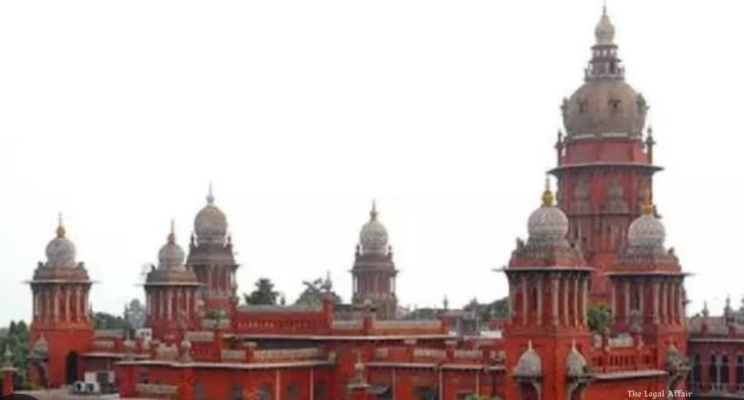
Introduction:
In a recent judgment, the Madras High Court dismissed a petition that sought to impose limits on the number of advocates permitted to accompany VIP or VVIP litigants in subordinate courts. The petition, filed by Advocate N. Mahendra Babu, was a response to concerns over security and overcrowding in court premises when prominent political figures appear, often surrounded by a large entourage of lawyers and supporters. The court, however, held that no statutory framework currently exists to support such limitations, and thus, the Registrar General of the High Court has no obligation to impose any restriction on the number of legal representatives or accompanying individuals for any party. The judgment, delivered by Chief Justice K.R. Shriram and Justice Senthilkumar Ramamoorthy, underscored the lack of existing laws governing the issue, ultimately rejecting the petitioner’s plea for an enforceable mandate.
Background of the Case:
The petitioner, Advocate N. Mahendra Babu, highlighted incidents where courtrooms and premises were severely congested due to the presence of large groups of advocates and supporters accompanying VIPs or VVIPs to hearings. Babu specifically cited an incident on July 14, 2023, when K. Annamalai, the Regional President of the Bharatiya Janata Party (BJP), appeared in the Saidapet Court for a defamation case. According to Babu, approximately 200 advocates gathered to accompany Annamalai, creating a virtual stampede inside and outside the court premises. This overwhelming crowd allegedly compromised safety and disrupted normal court proceedings.
The petitioner also referenced a similar scenario in 2009 when politician Subramanian Swamy appeared in the Madras High Court, resulting in significant crowding and safety concerns. Babu argued that Tamil Nadu courts, particularly in political cases, routinely witness an influx of advocates and supporters, which he claimed is often orchestrated to display mass popularity. He alleged that some politicians may even incentivize advocates to accompany them, thereby exacerbating the issue.
Furthermore, Babu emphasized that many of these courts, including the building where the Saidapet Court operates, are heritage structures with limited capacity to accommodate such large crowds. The petitioner contended that overcrowding not only jeopardizes the structural integrity of these historic buildings but also poses security risks for other litigants and court staff. To address these concerns, Babu requested the court to mandate the framing of rules that would limit the number of advocates and supporters accompanying high-profile litigants.
Arguments by the Petitioner (Advocate N. Mahendra Babu):
- Safety and Security Concerns:
Babu argued that the presence of hundreds of advocates and supporters accompanying VIPs and VVIPs creates chaotic situations, posing a risk to the safety and security of everyone present within the court premises. The petitioner claimed that the massive crowd accompanying these prominent litigants often disrupts regular court proceedings, making it challenging for others to navigate through the court and access their hearings.
- Impact on Court Infrastructure:
According to Babu, many of Tamil Nadu’s court buildings are historic structures with limited space and inadequate facilities to handle the massive crowds that often accompany high-profile litigants. The petitioner emphasized that these heritage structures were not designed to accommodate such heavy foot traffic, and overcrowding could lead to potential damage or degradation of these important historical sites.
- Alleged Influence and Public Spectacle:
Babu asserted that high-profile litigants, especially political figures, deliberately bring large groups of advocates and supporters to court as a means of showcasing their influence and popularity. He argued that this practice has become a cultural norm in Tamil Nadu’s courts, undermining the seriousness and sanctity of judicial proceedings. Babu also alleged that, in some cases, politicians financially incentivize advocates to accompany them to hearings, further aggravating the problem.
- Request for Regulatory Measures:
To address these issues, Babu urged the court to direct the State Government, the Director General of Police, and the Registrar General of the High Court to establish formal rules limiting the number of advocates and supporters who could accompany VIPs and VVIPs. Such regulations, he argued, would help maintain order in court premises and ensure smoother conduct of proceedings.
Arguments by the Respondents:
- Absence of Legal Provisions:
Counsel representing the respondents argued that no existing legislation limits the number of advocates or supporters who can accompany a party to court. Without any statutory mandate, they contended, it would be inappropriate for the court to unilaterally impose such restrictions. The respondents maintained that since the law does not currently impose any constraints on the number of accompanying individuals, any decision to restrict crowd size would be beyond the court’s authority.
- Public Duty and Judicial Limitations:
The respondents, including representatives of the Registrar General and State Government, argued that imposing restrictions on the number of individuals accompanying a litigant does not fall within the scope of public duty or the judiciary’s responsibilities. The counsel highlighted that the Registrar General has no legal obligation to regulate the number of advocates or supporters present during a litigant’s court appearance, particularly in the absence of a statutory basis for such action.
- Freedom of Association:
Implicit in the respondents’ arguments was the concept of freedom of association, whereby any party to a court proceeding should be entitled to legal representation without arbitrary limits. Restricting the number of advocates accompanying a litigant could be interpreted as an infringement on an individual’s right to freely choose their legal representation and support network.
Court’s Analysis and Judgment:
The bench of Chief Justice K.R. Shriram and Justice Senthilkumar Ramamoorthy considered the petitioner’s concerns but ultimately ruled against his plea for restricting the number of advocates accompanying VIP litigants. In its judgment, the court cited the absence of any statutory mandate or legal provision that could justify imposing such restrictions.
- No Existing Legal Framework:
The court emphasized that there is no current legislation or judicial precedent in Indian law that limits the number of advocates who can appear or accompany a party in court. In light of this, the court found it beyond its purview to issue a directive compelling the Registrar General or any other authority to impose such limits.
- Limits of Judicial Intervention:
The court pointed out that in the absence of a legislative mandate, imposing a restriction would exceed its jurisdiction and infringe on areas that are typically reserved for lawmakers. The bench noted that it is not the judiciary’s role to legislate, particularly in cases where the requested relief pertains to policy regulation rather than a question of law.
- Dismissal of the Petition:
Given that no statutory basis exists for restricting the number of advocates or supporters in courtrooms, the court dismissed Babu’s petition. The bench also stated that it could not issue a mandamus (a judicial writ compelling the performance of duty) to the respondents in this case since no clear duty to impose such restrictions exists within the framework of Indian law.
The court’s ruling thus reaffirmed the principle that judicial intervention must remain within the bounds of statutory law and that policy-level decisions are the responsibility of the legislative and executive branches of government.