


Introduction:
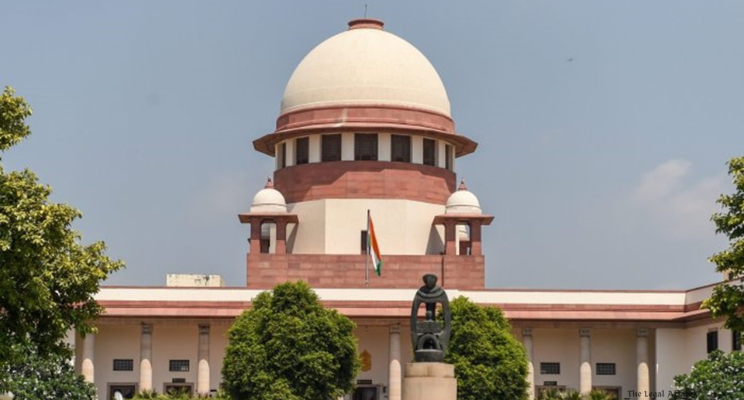
The Supreme Court of India recently delivered a landmark judgment in the murder case of former Bihar minister Brij Bihari Prasad, who was killed on June 13, 1998. The ruling overturned the Patna High Court’s acquittal of the accused, addressing the issue of the delayed forwarding of the First Information Report (FIR) to the magistrate. The bench, comprising Justices Sanjiv Khanna, Sanjay Kumar, and R. Mahadevan, emphasized that procedural delays, such as in the FIR submission, do not automatically undermine the prosecution’s case unless the accused can prove significant prejudice to their defense.
This decision, spurred by the appeal from Rama Devi, the widow of Brij Bihari Prasad, sheds light on the importance of balancing procedural aspects with the substantive merits of the case.
Arguments of the Appellant (Rama Devi):
Rama Devi contested the High Court’s acquittal, citing errors in the assessment of evidence, particularly the overemphasis on procedural issues.
Key Arguments:
- Credibility of Witnesses: The prosecution presented eyewitnesses who identified the accused, with their testimonies remaining consistent and credible. The High Court, Rama Devi argued, had undervalued these accounts.
- Ante-timed FIR Claim: The defense raised concerns about the delay in forwarding the FIR, suggesting it had been ante-timed. However, the appellant clarified that the incident occurred on the night of June 13, 1998, and the delay was justified due to the subsequent court holiday, with the FIR forwarded on June 15, 1998.
- Substantive Justice Over Procedural Irregularities: Rama Devi’s counsel emphasized that minor procedural lapses like delayed FIR forwarding should not outweigh substantial evidence linking the accused to the crime.
- Baseless Manipulation Allegation: The accused claimed that the delay allowed the police to manipulate evidence, but the appellant argued that there was no proof to support this assertion.
Arguments of the Respondents (Accused):
The defense focused on procedural flaws in the prosecution’s case, particularly the delay in forwarding the FIR, arguing that it undermined the fairness of the investigation.
Key Arguments:
- Ante-timed FIR: The defense claimed the delayed FIR raised suspicions of ante-timing and manipulation of facts.
- Prejudice Due to Delay: They argued that the delay compromised their defense, suggesting the police had time to frame the accused.
- Doubt on Witness Credibility: The defense questioned the reliability of the prosecution’s witnesses, claiming contradictions in their testimonies.
- Benefit of Doubt: They maintained that the High Court had rightly acquitted them, giving them the benefit of the doubt due to these procedural and testimonial inconsistencies.
Supreme Court’s Judgment:
The Supreme Court critically evaluated both sides’ arguments and found in favor of the appellant, overturning the Patna High Court’s acquittal.
Key Observations:
- Delay in FIR Not Fatal: The Court ruled that a delay in forwarding the FIR does not invalidate the prosecution’s case unless it can be shown to have prejudiced the defense. The Court cited previous judgments, such as State of Rajasthan v. Daud Khan (2016), which supported this position.
- Credibility of Eyewitnesses: The Court found the testimonies of eyewitnesses credible and consistent, noting that the High Court had erred by downplaying their significance based solely on procedural grounds.
- Substantive Justice: The Court emphasized that procedural issues should not outweigh substantive justice. There was ample evidence to convict the accused despite the delayed FIR.
- Reversal of Acquittal: Based on its findings, the Supreme Court set aside the Patna High Court’s acquittal and convicted the accused of the murder of Brij Bihari Prasad.
- Precedential Impact: This ruling is expected to impact future criminal cases, underscoring that procedural delays must be viewed in the context of the broader evidence, ensuring that justice is not hindered by technicalities.
Conclusion:
The Supreme Court’s judgment reinforces that procedural lapses like a delay in forwarding the FIR should not undermine the prosecution’s case unless prejudice is clearly demonstrated. By focusing on substantive justice and the strength of the evidence, this decision marks an important step in ensuring that justice prevails in serious criminal cases like murder.