


Introduction:
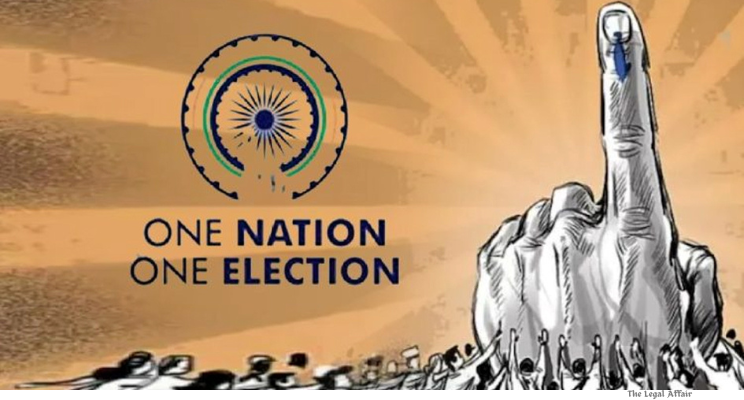
In a transformative move for India’s electoral system, the Union Cabinet has endorsed the recommendations of a High-Level Committee chaired by former President Ram Nath Kovind. This committee’s report on “one nation, one election” proposes sweeping changes to synchronize elections for the Lok Sabha (national parliament), State Legislative Assemblies, and local bodies such as Panchayats and Municipalities. Formed in September of the previous year, the committee included prominent members like Home Minister Amit Shah, former Leader of Opposition Ghulam Nabi Azad, and senior advocate Harish Salve, among others.
Key Objectives of the Recommendations:
At the heart of the committee’s recommendations is a drive to reduce the burden on stakeholders involved in India’s extensive electoral process. Elections in India often result in significant costs and logistical efforts for government agencies, political parties, businesses, courts, workers, and civil society. The report suggests a comprehensive solution through synchronizing elections across various levels of government, with the following core objectives:
- Streamlining Electoral Processes: The committee recommends reducing the frequency of elections by holding simultaneous polls for the Lok Sabha, State Assemblies, and local bodies.
- Enhancing Governance: With fewer election cycles, the government could potentially focus more on governance rather than perpetual campaigning.
- Reducing Electoral Fatigue: Voters and political parties alike would face fewer elections, cutting down on electoral fatigue.
Key Recommendations of the Committee:
The committee has outlined a two-step approach to synchronize elections across the country:
Phase One – Lok Sabha and State Assemblies:
The report recommends that elections for the Lok Sabha and State Assemblies be held simultaneously. This would require an alignment of terms, so that both the national parliament and state legislatures would finish their tenure at the same time.
Phase Two – Municipalities and Panchayats:
The second step involves synchronizing local body elections (Municipalities and Panchayats) with those of the Lok Sabha and State Assemblies. Local body elections should take place within a 100-day window of the general elections to ensure that all levels of government are elected around the same time.
Proposed Constitutional Amendments:
To achieve these sweeping changes, the committee has proposed several constitutional amendments:
- Article 82A: This newly proposed article would align the terms of the Lok Sabha and State Assemblies. Assemblies formed after the enactment of Article 82A would have terms that end in sync with the Lok Sabha. For instance, if the article is enacted in June 2024, any State Assembly elections held afterward would have terms that expire in 2029, alongside the Lok Sabha’s tenure.
- Articles 83 and 172: Amendments to these articles are suggested to accommodate the introduction of staggered elections and deal with situations such as hung assemblies or no-confidence motions. In such cases, fresh elections could be conducted but only for the remainder of the term, ensuring that the government’s tenure is aligned with the national election cycle.
- Article 324A: This proposed amendment is intended to manage the synchronization of elections for local bodies, such as Municipalities and Panchayats, with those of the Lok Sabha and State Assemblies.
Handling Political Instability:
The committee’s recommendations also address scenarios like a hung parliament or state legislature, or no-confidence motions leading to the collapse of a government. In such instances, fresh elections would be held only for the remainder of the term. For example, if a state government collapses two years into a five-year term, the newly elected government would serve only the remaining three years, aligning with the next round of national elections.
Implementation Mechanisms:
The report proposes the establishment of an Implementation Group to oversee the process of synchronizing elections. This group would ensure that the transition to simultaneous elections occurs smoothly, without major disruptions to the country’s governance structure.
Potential Benefits:
Reduced Electoral Costs: Fewer election cycles would mean lower financial and logistical demands on government resources.
Better Governance: With synchronized elections, governments could focus more on long-term planning and governance instead of being distracted by frequent election cycles.
Enhanced Stability: Aligning terms would foster greater political stability and continuity.
Conclusion:
The committee’s recommendations, if adopted, could bring about a significant shift in India’s electoral landscape. By synchronizing elections, the proposed “one nation, one election” system aims to streamline governance, reduce electoral fatigue, and create a more efficient electoral process. While the implementation of these recommendations would require substantial constitutional amendments and political consensus, the potential for a more synchronized and efficient electoral process marks a major shift in India’s democratic framework.