


Introduction:
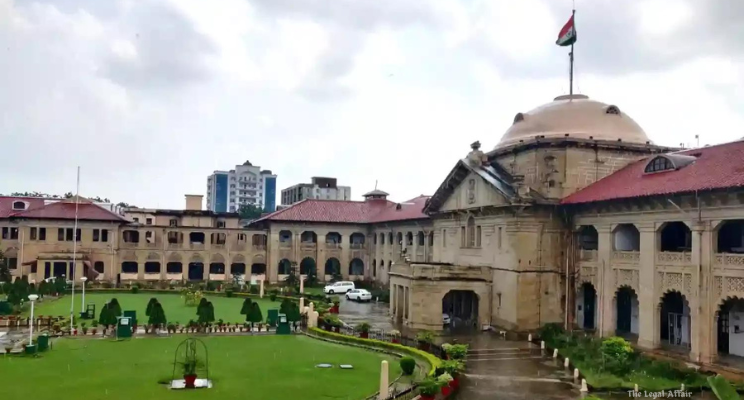
In a landmark ruling, the Allahabad High Court clarified the procedural requirements for handling interim maintenance applications under Section 24 of the Hindu Marriage Act, 1955. The court decisively ruled that evidence related to such applications should be considered at the stage of deciding the application itself and not deferred until evidence in the main matrimonial case is led. This ruling arose from a challenge by an appellant-wife against an order passed by the Family Court in Lucknow, which had significantly undercut her requested interim maintenance, citing the need for evidence to be first introduced in the main case. The High Court’s decision emphasizes the correct interpretation of the law, ensuring that parties receive timely relief during ongoing matrimonial proceedings.
Background of the Case:
The case involved an appellant-wife, Vineeta Verma, who challenged an order by the Additional Principal Judge-3, Family Court, Lucknow, concerning her application under Section 24 of the Hindu Marriage Act, 1955. Vineeta had sought interim maintenance of ₹20,000 per month from her estranged husband, Brajnesh Kumar, claiming that she lacked independent income and required financial support to pursue the legal proceedings.
The Family Court, however, granted her only ₹8,000 as a lump sum for litigation expenses and a nominal ₹100 per date fixed in the court proceedings. Dissatisfied with this decision, Vineeta approached the Allahabad High Court, contending that the Family Court had erroneously held that the determination of interim maintenance could only occur after the evidence was adduced in the main matrimonial dispute.
Arguments of the Petitioner (Appellant-Wife):
The appellant-wife, Vineeta Verma, argued through her counsel that the Family Court’s decision was fundamentally flawed. The Family Court had taken the view that interim maintenance could not be appropriately assessed until both parties had presented evidence regarding their socio-economic statuses in the main matrimonial case. This delay, Vineeta argued, was not only legally unsound but also contrary to the purpose of Section 24, which aims to provide immediate financial relief to the spouse lacking independent income.
Vineeta further contended that the Family Court had misinterpreted the law by deferring the decision on interim maintenance, thus leaving her without adequate financial resources to sustain herself and pursue the ongoing litigation. The nominal amount granted by the Family Court, she argued, was grossly insufficient to cover her living expenses or legal costs, effectively denying her access to justice.
The appellant also pointed out apparent irregularities in the Family Court’s order, including overwriting on the awarded amount, which she claimed indicated a lack of proper consideration and diligence in deciding her application.
Arguments of the Respondent (Husband):
The respondent, Brajnesh Kumar, through his counsel, defended the Family Court’s approach, arguing that a thorough examination of both parties’ financial conditions was necessary to arrive at a fair and just determination of interim maintenance. He contended that without complete evidence, the court would be unable to accurately assess the socio-economic status of both parties, and thus, any award made prior to such an assessment could be arbitrary and unfair.
Brajnesh argued that the Family Court’s decision to defer the full determination of interim maintenance until after evidence was presented in the main case was a cautious and legally sound approach. He claimed that this method ensured that the court’s decision was based on comprehensive and accurate information, thereby preventing potential misuse of Section 24 provisions.
Moreover, Brajnesh contested the amount sought by Vineeta, arguing that the sum of ₹20,000 per month was excessive and did not accurately reflect her needs or his financial capability. He further claimed that the lump sum awarded by the Family Court was adequate given the circumstances and should not be disturbed.
Court’s Judgment and Reasoning:
After considering the arguments from both sides, the Division Bench of Justice Rajan Roy and Justice Om Prakash Shukla delivered a judgment that set the record straight on the procedural requirements under Section 24 of the Hindu Marriage Act. The High Court quashed the Family Court’s order and remanded the matter for fresh consideration, directing that the application under Section 24 be decided expeditiously, with evidence being considered at the application stage itself.
- Timing of Evidence: The High Court was unequivocal in its interpretation of Section 24, stating that the provision is designed to provide immediate financial relief to the spouse who lacks independent income. The court clarified that the heading of Section 24—”Maintenance pendente lite and expenses of proceedings”—makes it clear that the purpose of the provision is to ensure that financial support is available during the pendency of matrimonial proceedings.
- The court held that the necessity of leading evidence should be addressed at the stage of deciding the application itself. This means that both parties are expected to present any relevant evidence pertaining to their income and expenses when the application is being considered. The Family Court’s view that such evidence should only be considered after the main case evidence was presented was deemed a clear misunderstanding of the legal position.
- Judicial Misinterpretation: The High Court found that the Family Court had misinterpreted the legal framework by deferring the decision on interim maintenance. The Bench noted that Section 24 does not contemplate a delay in granting maintenance until evidence in the main case is led. Instead, it provides a mechanism for the court to make an interim award based on the materials available at the time of the application. The Family Court’s approach effectively deprived the appellant of timely financial support, contrary to the intent of the legislature.
- Importance of Immediate Relief: The court emphasized that the purpose of Section 24 is to ensure that the spouse without independent means is not left destitute or unable to pursue or defend the legal proceedings due to lack of resources. By delaying the decision on interim maintenance, the Family Court had undermined this purpose, potentially leaving the appellant in a precarious financial situation during the pendency of the matrimonial dispute.
- Overwriting and Irregularities: The High Court also took note of the alleged overwriting on the lump sum amount awarded by the Family Court. While the court did not delve deeply into this aspect, it observed that such irregularities raised concerns about the diligence and fairness of the Family Court’s decision-making process. The High Court’s decision to set aside the order was influenced, in part, by these procedural anomalies.
- Remand for Fresh Consideration: In its final judgment, the High Court quashed the Family Court’s order and directed it to reconsider the application under Section 24 with the proper understanding of the law. The Family Court was instructed to make a fresh determination of interim maintenance based on the evidence presented at the application stage, ensuring that the appellant’s financial needs were adequately addressed during the pendency of the matrimonial proceedings.
Conclusion:
The Allahabad High Court’s ruling provides a crucial clarification on the application of Section 24 of the Hindu Marriage Act, 1955, emphasizing that interim maintenance applications must be decided based on the evidence available at the time of the application. This decision reinforces the legislative intent behind Section 24, which is to provide immediate and necessary financial relief to spouses who lack independent means during the pendency of matrimonial disputes. The court’s directive to reconsider the appellant’s application underscores the importance of ensuring that judicial processes are conducted with diligence and fairness, particularly when the financial security of a party is at stake.