


Introduction:
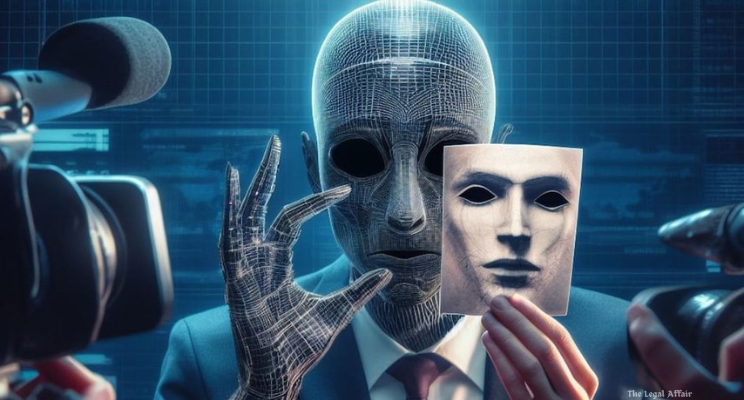
In a recent development, the Delhi High Court has expressed serious concerns over the rising menace of deepfake technology and the potential dangers it poses to society. During the hearing of two Public Interest Litigations (PILs) that sought the regulation of deepfake technology, a Division Bench consisting of Acting Chief Justice Manmohan and Justice Tushar Rao Gedela remarked that the antidote for fake artificial intelligence (AI) lies within technology itself. The court highlighted the urgency for the Union Government to take decisive steps in addressing this issue. The PILs, filed by senior journalist Rajat Sharma and Advocate Chaitanya Rohilla, argue that deepfakes, if left unchecked, could lead to widespread misinformation, fraud, and violations of individual rights.
Background of the Case:
The case arose from growing concerns about the misuse of deepfake technology, which allows for the creation of hyper-realistic but fake images, videos, and audio recordings. Deepfakes have been increasingly used for malicious purposes, including defamation, identity theft, and the dissemination of false information. Rajat Sharma and Chaitanya Rohilla filed separate PILs to address the lack of regulation around this technology and to push for legal measures that would mitigate its harmful effects.
The PILs came against the backdrop of incidents where deepfakes were used to distort reality, such as the use of a journalist’s image to falsely depict him promoting a product on national television. These incidents have highlighted the dangers of deepfake technology in compromising the integrity of public discourse and damaging personal reputations.
Petitioners’ Arguments:
Rajat Sharma’s Petition:
Rajat Sharma, a well-known journalist, filed his petition to raise awareness about the potential threats posed by deepfake technology. Sharma’s legal team argued that deepfakes could be weaponized to create disinformation campaigns that undermine public trust and threaten democratic processes. The petition also pointed out that deepfakes could be used for fraudulent activities, including identity theft, and could cause irreparable harm to individuals’ reputations and privacy.
Sharma’s petition emphasized the need for the Union Government to take immediate steps to regulate the creation and dissemination of deepfakes. It urged the government to block public access to software and platforms that enable the creation of deepfakes until proper guidelines are established. Sharma’s counsel also highlighted international responses to the issue, noting that regions like the European Union have already implemented regulations to combat the spread of deepfakes.
Chaitanya Rohilla’s Petition:
Advocate Chaitanya Rohilla’s petition echoed similar concerns, with a particular focus on the non-regulation of deepfake technology in India. Rohilla’s legal team argued that the existing frameworks under the Information Technology Act and the Data Protection Act are insufficient to address the complexities of deepfake technology. Rohilla’s petition called for the Union Government to create specific guidelines for the regulation of AI and deepfake technologies, ensuring that their use aligns with the fundamental rights enshrined in the Constitution of India.
Rohilla’s petition also sought the identification and blocking of websites and platforms that provide access to deepfake technology. The petition underscored the need for a proactive approach in preventing the misuse of deepfakes, particularly in the context of political discourse and elections, where the potential for harm is significant.
Respondent’s Arguments (Union Government):
The Union Government, represented by Additional Solicitor General (ASG) Chetan Sharma, argued that the current legal frameworks are adequate to manage the challenges posed by deepfake technology. The ASG cited the Information Technology Act and the Data Protection Act as sufficient to address the creation and misuse of deepfakes. The government maintained that these laws, coupled with ongoing efforts to raise awareness and create grievance mechanisms, are the appropriate tools for mitigating the risks associated with deepfakes.
The ASG also pointed out that while deepfake technology is a global issue, efforts to counter it must include technological solutions. He suggested that counter-AI technology could be developed to detect and prevent the misuse of deepfakes. The ASG emphasized that while legislation and advisories are necessary, they may not be sufficient on their own to tackle the issue comprehensively.
Court’s Observations:
During the hearing, the Division Bench of the Delhi High Court expressed its concerns about the potential damage that deepfake technology could inflict on society. Acting Chief Justice Manmohan acknowledged the Union Government’s efforts but stressed the importance of technological solutions to counter the threat. He noted that deepfakes are not just an Indian problem but a global one, with countries like the United States and members of the European Union already taking steps to regulate this technology.
The Court also took note of the challenges posed by the global nature of deepfake platforms, many of which are based outside India. This raised questions about the applicability and enforcement of Indian laws on these platforms. The bench highlighted the need for international cooperation and the development of global standards to effectively combat the misuse of deepfake technology.
ACJ Manmohan remarked that the growing influence of deepfake technology, especially in the context of elections, could have far-reaching consequences. He urged the government to take proactive steps to address the issue before it escalates further. The Court acknowledged that while laws and guidelines are essential, the real antidote to deepfakes will be found in technological innovations designed to detect and neutralize such threats.
Court’s Direction:
After considering the arguments from both sides, the Delhi High Court directed the petitioners’ counsels to submit an additional affidavit within two weeks, detailing their suggestions on how to tackle the misuse of deepfake technology. The Court emphasized that the government needs to act swiftly and decisively to address the issue, given the potential harm deepfakes can cause.
The matter was adjourned for further hearing on October 8, 2024. The Court’s directive indicates its seriousness in ensuring that the issue of deepfake technology is addressed comprehensively, with a combination of legal, regulatory, and technological measures.