


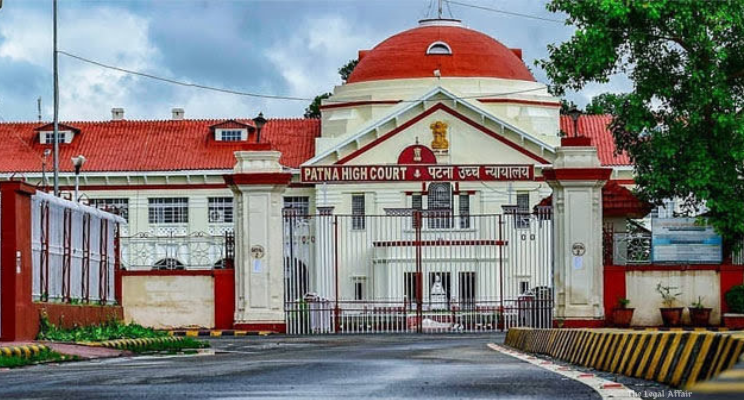
Introduction:
In a significant ruling, the Patna High Court recently set aside an order issued by the Sub-Divisional Magistrate (SDM) under Section 133 of the Criminal Procedure Code (Cr.P.C.), which sought to remove an alleged obstruction or encroachment from a disputed piece of land. The case revolved around a conflict between private parties, where the petitioner was accused of creating a nuisance by allowing their tenant to run a khatal (a cattle shed) on the land, resulting in the accumulation of animal dung. The complainant argued that this accumulation obstructed his access to a metalled road. However, the court ruled that the proceedings under Section 133 Cr.P.C. were not applicable, as the matter at hand was a civil dispute and did not constitute a public nuisance affecting the public at large.
Background:
The dispute originated when a complaint was filed with the local police against the petitioner, alleging that the tenant of the petitioner was operating a khatal on the land, which led to the accumulation of animal waste, obstructing the complainant’s access to a nearby metalled road. The complainant claimed that this obstruction caused significant inconvenience and sought the removal of the khatal under Section 133 of the Cr.P.C., a legal provision that empowers Executive Magistrates to issue orders for the removal of public nuisances or obstructions.
Upon receiving the complaint, the SDM issued a conditional order under Section 133 Cr.P.C., directing the petitioner to remove the alleged obstruction. The petitioner challenged this order, arguing that the obstruction was not a public nuisance but rather a private dispute between neighbors. The petitioner contended that the complainant had been provided access to the metalled road via another route, and the proceedings under Section 133 Cr.P.C. were therefore unwarranted and constituted an abuse of the legal process.
Arguments of Both Sides:
Petitioner’s Argument:
The petitioner, represented by Advocate Choudhary Shyam Nandan, argued that the SDM’s order was legally unsustainable because it misconstrued a private dispute as a matter of public nuisance. The petitioner emphasized that the complainant’s grievance was personal and did not impact the public at large, a prerequisite for invoking Section 133 Cr.P.C. They further argued that the complainant had been provided access to the metalled road through an alternate route, and thus, there was no obstruction or inconvenience caused to the public.
The petitioner also asserted that the accumulation of animal dung on the land did not constitute a public nuisance under the legal definition, which requires the obstruction to cause discomfort or inconvenience to the community as a whole. The petitioner maintained that the complainant was attempting to assert an easementary right, which is a civil matter that should be adjudicated by a Civil Court, not an Executive Magistrate under the Cr.P.C.
Additionally, the petitioner argued that Section 133 Cr.P.C. should not be used as a tool to resolve private disputes, especially when there is no public demand for the removal of the alleged nuisance. The petitioner urged the court to quash the SDM’s order and the entire proceedings initiated under Section 133 Cr.P.C., as they were an abuse of the legal process and beyond the jurisdiction of the Executive Magistrate.
State’s Argument:
The State, represented by Mr. Upendra Kumar, Additional Public Prosecutor (APP), defended the SDM’s order, arguing that the obstruction caused by the petitioner’s tenant was indeed a nuisance, as it prevented the complainant from accessing the metalled road. The APP contended that even if the issue primarily affected the complainant, the SDM was within his rights to issue a conditional order under Section 133 Cr.P.C. to prevent further inconvenience.
The State argued that the SDM had conducted an appropriate inquiry before issuing the order and that the removal of the obstruction was necessary to ensure that the complainant’s right to access the public road was upheld. The APP further asserted that the proceedings were initiated in accordance with the law, and the petitioner’s challenge was an attempt to evade compliance with a legitimate order.
Private Respondent’s Argument:
The private respondent (complainant), represented by Advocate Suman Kumar Jha, reiterated that the accumulation of animal dung on the land constituted a significant obstruction to their access to the metalled road. The complainant argued that despite being provided with an alternate route, the obstruction remained a considerable inconvenience, affecting their daily activities.
The complainant further argued that the SDM’s intervention was necessary to resolve the dispute and restore their access to the road. They claimed that the petitioner’s actions were not merely a private matter but had broader implications for the community, justifying the use of Section 133 Cr.P.C. The respondent also questioned the petitioner’s intentions, suggesting that the khatal was deliberately positioned to obstruct their access.
Court’s Judgment:
After hearing the arguments from all parties, the Patna High Court, presided over by Justice Jitendra Kumar, delivered a detailed judgment quashing the SDM’s order and setting aside the proceedings initiated under Section 133 Cr.P.C. The court emphasized that the essential criterion for invoking Section 133 Cr.P.C. is the existence of a public nuisance or obstruction that causes inconvenience and discomfort to the public at large, not merely to an individual.
Justice Kumar observed that Section 133 Cr.P.C. is designed to address situations where an obstruction or nuisance affects the community as a whole. It is not intended to resolve private disputes or adjudicate on matters of civil law, such as easementary rights or access pathways. The court found that in this case, the obstruction caused by the khatal and the accumulation of animal dung was not affecting the public at large but was instead a personal grievance of the complainant.
The court further noted that the complainant had been provided an alternate route to access the metalled road, which negated the claim of obstruction. The court also pointed out that the complainant did not allege any public demand for the removal of the obstruction, further weakening the case for invoking Section 133 Cr.P.C. The judge clarified that the SDM had overstepped his jurisdiction by issuing an order under Section 133 Cr.P.C. in what was essentially a civil dispute between private parties.
Justice Kumar’s ruling emphasized that such disputes should be resolved in Civil Courts, which have the exclusive jurisdiction to adjudicate on issues involving private rights, such as easementary claims. The court concluded that the proceedings initiated under Section 133 Cr.P.C. were not only legally unsustainable but also constituted an abuse of the legal process. Consequently, the court quashed the impugned notice, the SDM’s order, and the entire proceedings, under its inherent powers conferred by Section 482 Cr.P.C. to prevent the misuse of judicial processes and to uphold justice.
Conclusion:
The Patna High Court’s decision to set aside the SDM’s order under Section 133 Cr.P.C. underscores the importance of distinguishing between public nuisances and private disputes in legal proceedings. By quashing the proceedings, the court reinforced the principle that Section 133 Cr.P.C. should only be invoked in cases where there is a genuine public nuisance affecting the community at large, not merely an individual or a small group.
This ruling serves as a reminder that the proper forum for resolving civil disputes, such as those involving easementary rights or private land access, is the Civil Court, which has the requisite jurisdiction to adjudicate such matters. The court’s decision also highlights the need for judicial officers to carefully assess the nature of the grievance before exercising powers under Section 133 Cr.P.C., ensuring that these powers are not misused to settle private scores.