


Introduction:
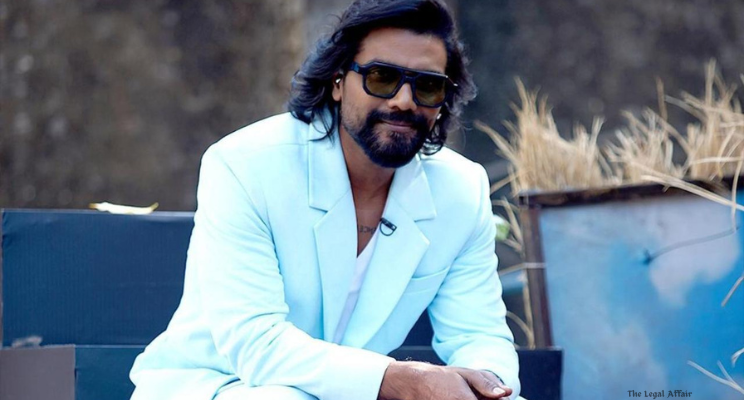
In a significant legal development, the Allahabad High Court has dismissed a petition filed by renowned Bollywood choreographer and filmmaker Remo D’Souza seeking to quash proceedings in a 2016 cheating case. D’Souza is accused of defrauding a Ghaziabad-based businessman by persuading him to invest a substantial sum in an upcoming film. The case, which has garnered widespread attention due to D’Souza’s celebrity status, centers on allegations of financial misconduct and intimidation involving underworld elements.
Justice Rajeev Misra, who presided over the case, emphasized that D’Souza failed to challenge the chargesheet filed against him, a procedural lapse that ultimately led to the dismissal of his plea.
Arguments of Both Sides:
Prosecution’s Contentions:
The prosecution, representing the State of Uttar Pradesh, presented a compelling case against Remo D’Souza. The allegations stem from a 2016 FIR lodged by businessman Satyendra Tyagi, who claimed that D’Souza persuaded him to invest Rs 5 crore in a film project titled “Amar Must Die,” promising to double his investment upon the film’s release. However, D’Souza allegedly failed to fulfill this agreement.
D’Souza was charged under Sections 420 (cheating and dishonestly inducing delivery of property), 406 (criminal breach of trust), and 386 (extortion by putting a person in fear of death or grievous hurt) of the Indian Penal Code (IPC). These charges highlighted the seriousness of the allegations, suggesting a calculated effort to defraud the complainant.
The prosecution further alleged that when Tyagi attempted to recover his investment, D’Souza resorted to intimidation tactics, enlisting the help of underworld don Prasad Pujari, who allegedly threatened Tyagi.
As the investigation progressed, a chargesheet was filed against D’Souza on September 25, 2020. The prosecution argued that this chargesheet provided sufficient grounds to proceed with the case, reflecting a thorough investigation into the allegations.
When D’Souza filed a petition to quash the case and sought a stay on the proceedings, the prosecution highlighted that the chargesheet had not been challenged by the petitioner. The state’s counsel argued that without contesting the chargesheet, D’Souza’s plea lacked merit and should not be entertained by the Court. This procedural oversight formed the crux of the prosecution’s argument and ultimately influenced the Court’s decision.
Defense’s Arguments:
Remo D’Souza’s defense team, led by counsel Vijit Saxena, sought to challenge the legal proceedings initiated against him. The defense argued that the 2016 FIR was based on false and baseless allegations, asserting that Tyagi’s claims were exaggerated and possibly driven by ulterior motives.
The defense contended that the businessman’s allegations about a promised return on investment and subsequent threats were not only unsubstantiated but also part of a fabricated narrative designed to tarnish D’Souza’s reputation.
In addressing the Court, the defense focused on procedural aspects, particularly the cognizance order passed by the A.C.J.M. III, Ghaziabad, in October 2020. The defense argued that the Court should consider the lack of direct evidence linking D’Souza to the crimes alleged in the FIR. They emphasized that the claims about underworld involvement were speculative and lacked concrete proof, urging the Court to dismiss the charges as unfounded.
The defense also pointed to discrepancies in the prosecution’s narrative, suggesting that the delay in filing the FIR and the lack of immediate action by the complainant undermined the credibility of the charges. However, the defense’s case was significantly weakened by their failure to challenge the chargesheet filed in September 2020, a crucial procedural oversight that ultimately proved pivotal.
Court’s Judgment:
The Allahabad High Court, in its judgment, took a firm stance on the procedural aspects of the case. Justice Rajeev Misra, who presided over the hearing, meticulously examined the arguments from both sides. The Court’s decision hinged on the fact that D’Souza had not challenged the chargesheet filed against him—a procedural requirement that the Court deemed essential for the relief he sought.
Justice Misra emphasized that the chargesheet dated September 25, 2020, was a critical document encapsulating the findings of the investigation and forming the basis of the prosecution’s case. Without contesting the chargesheet, D’Souza’s petition lacked the necessary grounds to proceed, leading to the dismissal of his plea.
The judgment underscored the importance of following due process in legal proceedings, particularly in criminal cases where the stakes are high. The Court noted that procedural lapses, such as failing to challenge key documents like the chargesheet, can have significant consequences. D’Souza’s failure to address the chargesheet directly led to the dismissal of his petition.
Furthermore, the Court rejected the defense’s arguments that the allegations were baseless and that the FIR was filed with malicious intent. Justice Misra noted that these contentions could not be substantiated without a proper challenge to the chargesheet. The Court also dismissed the defense’s claims about underworld involvement as speculative, emphasizing that the legal process must be grounded in evidence rather than conjecture.
The dismissal of D’Souza’s petition reaffirms the Court’s commitment to upholding the rule of law and ensuring that legal proceedings are conducted fairly and transparently. The judgment serves as a reminder that procedural rigor is essential in the judicial process, and even high-profile individuals are subject to the same legal standards as another citizen.