


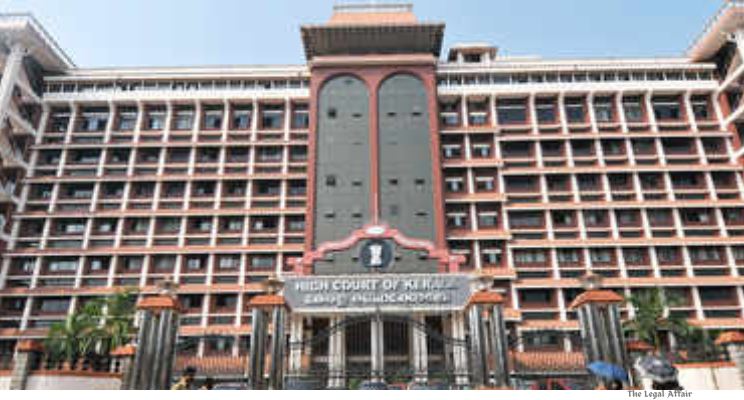
Introduction:
In a significant ruling, the Kerala High Court has upheld the freedom of expression for cartoonists, affirming their right to artistic expression under Article 19(1)(a) of the Indian Constitution. The court quashed proceedings against the Kerala news daily Malayala Manorama and its editorial team, who faced accusations of insulting the national flag through a cartoon published on the 70th Independence Day.
Case Background:
The case arose from a complaint filed by the Bharatiya Janata Party’s Area Committee General Secretary against the editorial staff of Malayala Manorama. The complaint pertained to a caricature published in the newspaper, which depicted Mahatma Gandhi and the Indian flag, with a black line outlining the saffron portion of the flag. The complainant alleged that this depiction constituted an insult to the national flag, invoking Section 2 of the Prevention of Insult to National Honour Act, 1971.
Arguments from Both Sides:
Petitioner’s Arguments:
The petitioners, represented by Advocate Millu Dandapani, argued that Malayala Manorama and its editorial team had no intention of dishonoring the national flag or Mahatma Gandhi. They emphasized that the cartoon was a creative expression celebrating Independence Day, not an act of disrespect. The petitioners contended that cartoonists, as part of the press and media, are entitled to freedom of expression, which includes the right to create and publish caricatures. They asserted that the complaint was unjustified and hypercritical, focusing unfairly on a minor element of a broader celebratory context.
Respondents’ Arguments:
The prosecution, represented by Advocate Prathap SRK and Public Prosecutor Sangeetharaj N R, argued that the cartoon amounted to an insult under Section 2 of the Prevention of Insult to National Honour Act. They maintained that any depiction that alters the appearance of the national flag could be interpreted as disrespectful. The respondents highlighted the necessity of upholding national symbols and sentiments, suggesting that even unintended disrespect could be detrimental.
Court’s Judgment:
Justice P.V. Kunhikrishnan, in his judgment, emphasized that cartoonists, as integral members of the press and media, are protected under the freedom of expression guaranteed by Article 19(1)(a) of the Constitution. He acknowledged the significant role of caricatures in engaging and provoking thought, affirming that such artistic expressions fall within the scope of protected speech.
The court noted that the term “insult” in the Prevention of Insult to National Honour Act must be understood in its ordinary meaning, referring to derogatory or demeaning actions intended to offend or humiliate. Justice Kunhikrishnan clarified that the Act targets deliberate acts intended to insult national honor, not mere artistic portrayals. The court found no evidence that the cartoon was created with the intent to disrespect the national flag or Mahatma Gandhi.
The judge appreciated the cartoon’s context as part of a celebratory edition marking India’s Independence Day and criticized the complaint for failing to consider the positive aspects of the publication. The court concluded that Malayala Manorama and its editorial staff acted within their rights to freedom of expression and had no intention to insult national symbols.