


Introduction:
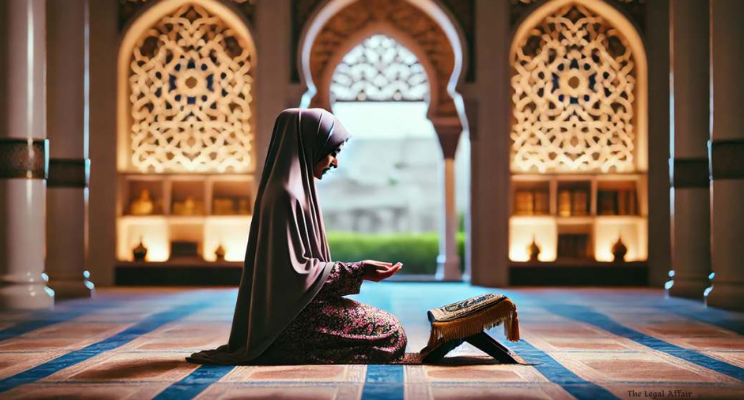
In a landmark decision, the Telangana High Court has affirmed the right of women from the Akbhari Sect of Shia Muslims to participate in religious activities at the Ibadat Khana located in Darulshifa, Hyderabad. The ruling came in response to a writ petition filed by the Anjumane Alavi Shia Imamia Ithna Ashari Akhbari Regd Society, which challenged the exclusion of women from conducting Majlis, Jashans, and other religious prayers in the mosque. The case sheds light on fundamental rights and religious freedoms within the Shia Muslim community.
Case Background:
The dispute over women’s access to the Ibadat Khana has been ongoing, with the petitioner-society seeking permission for Shia Muslim women to engage in religious activities. In October 2023, the society submitted multiple representations to the Telangana State Waqf Board, which were met with no response. Consequently, the society approached the High Court for judicial intervention.
On December 11, 2023, the court issued an interim order allowing women of the Akbhari Sect to conduct religious activities in the Ibadat Khana. This decision was challenged by the third respondent, the mutawalli (trustee) of the Ibadat Khana, who sought to vacate the interim order.
Arguments from Both Sides:
Petitioner’s Arguments:
The petitioner’s counsel, Senior Advocate P. Venugopal, argued that denying access to women from the Akbhari Sect violated their fundamental rights under Articles 14 and 25(1) of the Constitution, which guarantee equality and freedom of religion. The petitioner cited a 2007 decision by the Waqf Board that allowed Shia Muslim women to conduct Majlis at the Ibadat Khana as a precedent. They contended that the exclusion of Akbhari Sect women from the mosque was discriminatory and contrary to the principles of equality and religious freedom.
Respondents’ Arguments:
The Waqf Board’s Standing Counsel, Abu Akram, argued that religious customs and conventions should be respected. However, he was unable to produce any specific religious texts prohibiting women’s entry into prayer halls. The third respondent contended that the matter was under consideration by a Tribunal and questioned the petitioner’s standing under the Waqf Act.
The respondents asserted that the restriction was based on religious sentiments rather than legal provisions and expressed concerns about the implications of permitting women from one sect while excluding another.
Court’s Judgment:
Justice Nagesh Bheemapaka delivered the judgment, which upheld the petitioner’s rights. The judge referred to the Supreme Court’s Sabarimala Temple case, which reinforced women’s right to access places of worship. He noted that the Holy Quran does not explicitly prohibit women from entering prayer halls, except during certain periods, and that previous permissions granted by the Waqf Board to Shia Muslim women further supported the petitioner’s claims.
Justice Bheemapaka emphasized that Article 25(1) of the Constitution guarantees every individual’s right to practice and propagate religion without discrimination. Despite acknowledging the pending Tribunal case, the court exercised its jurisdiction under Article 226 to address fundamental rights violations.
The court also took into account the Waqf Board’s admission that the Ibadat Khana belonged to the entire Shia community, including both Akbhari and Vusooli sects, as well as Shia women. This strengthened the petitioner’s argument for equal access.
In conclusion, the High Court upheld its interim order, granting women from the Akbhari Sect the right to conduct religious activities in the Ibadat Khana, ensuring their participation in religious practices is not hindered by sectarian biases.