


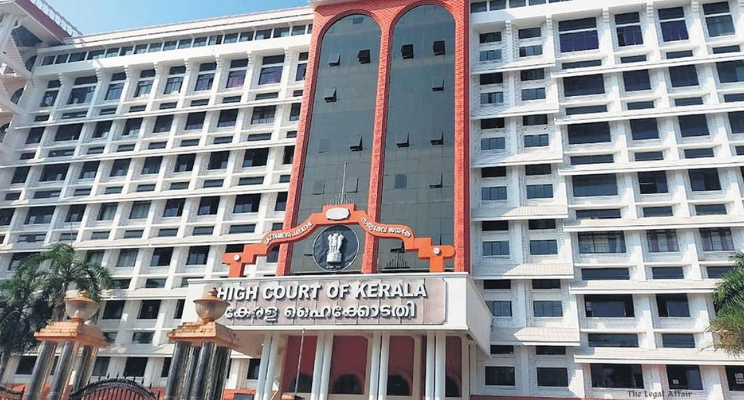
Introduction:
In the case titled State of Kerala v. Enforcement Directorate, WA 1532/2021 in WP(C) No. 13112/2021, the Kerala High Court on September 26, 2025, upheld the interim order passed by a Single Judge staying the functioning of a State-appointed Inquiry Commission constituted to investigate whether the Enforcement Directorate (ED) and other central agencies had falsely implicated political leaders, including Chief Minister Pinarayi Vijayan, in the high-profile gold smuggling case. The case originated from the seizure of 30 kilograms of gold, valued at approximately Rs. 14.82 crores, at the Thiruvananthapuram International Airport on July 6, 2020. The consignment was allegedly marked as ‘Diplomatic Baggage’ destined for the UAE Consulate. During the investigation, several offences under the Unlawful Activities (Prevention) Act (UAPA), 1967, and the Prevention of Money Laundering Act (PMLA), 2002, were revealed, prompting the National Investigation Agency (NIA) and ED to register cases against the prime accused, Swapna Suresh and Sandeep Nair. It was contended that these accused were allegedly coerced by the ED to implicate the CPI(M)-led State Government and its Chief Minister in statements purportedly linking them to the smuggling operation.
Judgement:
Following the seizure, the State Government constituted an Inquiry Commission headed by former High Court Judge Justice V.K. Mohanan to examine whether central agencies had deliberately framed political leaders. The ED, however, challenged the notification of the Inquiry Commission through a writ petition, arguing that the Commission was exceeding its mandate. The Single Judge, while entertaining the petition, granted an interim stay, observing that the inquiry’s objective was to investigate whether statements contained in a voice clip or letter allegedly issued by the accused revealed any conspiracy to falsely implicate political leaders, and such matters are best examined by the Special Court supervising the investigation. The Court emphasized that parallel inquiries could impede ongoing investigations, potentially benefiting the accused and undermining legislative objectives under which the accused had been booked. The bench concluded that admitting the writ petition and granting the interim stay was prima facie justified. The Kerala High Court Division Bench comprising Justices Sushrut Arvind Dharmadhikari and Syam Kumar V.M., upon hearing the writ appeal, affirmed the Single Judge’s interim order in open court, dismissing the appeal and observing that the ED is amenable to writ jurisdiction under Article 226 of the Constitution. The bench further clarified the ED’s statutory status, noting that while it functions as a Department of the Central Government, it is also a statutory body under the PML Act and is therefore entitled to approach the High Court through a writ petition. The bench highlighted that even if the Directorate itself were not permitted to file a petition in its name, the Deputy Director of Enforcement, as a statutory authority under the PML Act, unquestionably possessed the locus standi to do so. The Court reinforced that the inquiry commission’s function should not supersede or interfere with ongoing investigations conducted by statutory agencies, and any inquiry into potential false implications must be carefully scrutinized to ensure it does not derail criminal proceedings. Both sides presented arguments regarding the scope of statutory powers, procedural propriety, and the implications of parallel investigations.
The State Government contended that the Commission’s formation was within its executive prerogative to oversee potential abuse of central investigative agencies and protect political offices from malicious prosecution. The ED countered, asserting that the commission’s mandate effectively amounted to interference with ongoing legal investigations and could prejudice the investigation of the gold smuggling case under UAPA and PMLA provisions. The Court, after considering submissions, reaffirmed the principle that statutory bodies conducting investigations enjoy autonomy under the law and that inquiries questioning their integrity must be balanced against ongoing criminal investigations to prevent miscarriage of justice. The bench concluded that the stay on the State-appointed Commission was justified, emphasizing the need to maintain the sanctity of statutory investigations while ensuring procedural safeguards for political figures. The detailed order of the Division Bench affirms the Single Judge’s interim decision, establishing that the ED, as a statutory body, has the right to invoke writ jurisdiction and that parallel inquiries must not impede or obstruct ongoing investigations in high-profile cases. The ruling serves as an important precedent clarifying the powers of statutory investigative agencies vis-à-vis executive-appointed commissions, balancing accountability, and ensuring that investigatory processes are not hindered by overlapping inquiries or politically motivated investigations. It also highlights the judiciary’s role in maintaining the integrity of criminal investigations while simultaneously providing remedies against potential overreach in inquiries that may impact ongoing legal proceedings.