


Introduction:
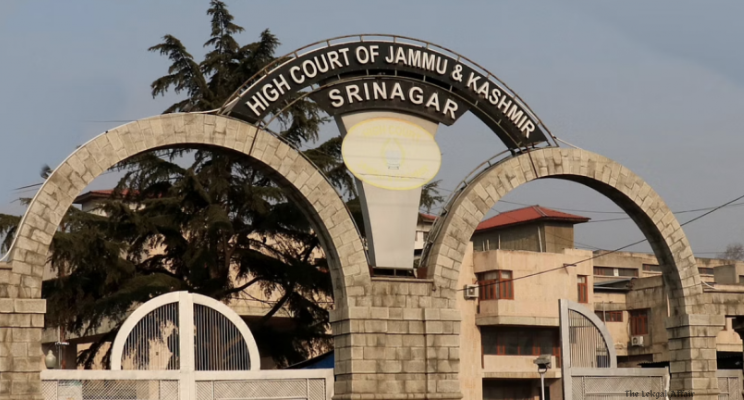
In Sanjay Gupta & Another v. Prem Kumar, reported as 2026 LiveLaw (JKL), the High Court of Jammu & Kashmir and Ladakh was called upon to decide an important question at the intersection of press freedom, criminal defamation, reputation, and editorial responsibility. The petition arose from a complaint filed under Section 500 of the Ranbir Penal Code (RPC) alleging defamation through publication of a newspaper report that described the complainant as an overground worker of terrorists and attributed to him connections with militants involved in attacks on security forces. The proceedings before the High Court were instituted under Section 482 Cr.P.C., whereby the petitioners challenged both the complaint pending before the Court of the Judicial Magistrate 1st Class, Samba, and the order by which process had been issued against them. The complainant, Prem Kumar, was stated to be a businessman engaged in computer repair work at Ramgarh, Samba. The two petitioners were Sanjay Gupta, described as the owner of the newspaper Dainik Jagran, and Abhimanyu Sharma, described as the Chief Editor of the newspaper. According to the complaint, the petitioners published a news item, without verifying the truth of the allegations, portraying the complainant as an overground worker of militants and stating that he had been taken into custody and had made disclosures in relation to militant attacks. The complainant asserted that such publication seriously damaged his social standing and lowered his image in the eyes of relatives, acquaintances, and members of the public. The trial Magistrate, after recording the complainant’s statement and the testimony of one witness, found prima facie grounds to proceed for the offence punishable under Section 500 RPC. Aggrieved, the petitioners approached the High Court, contending that the publication was based on information already available in the public domain and sourced from the investigating agency, that the owner of the newspaper could not be held vicariously liable without specific allegations, and that criminal prosecution in such matters had the potential to interfere with the constitutional guarantee of freedom of speech and expression. Justice Sanjay Dhar, while considering the matter, undertook an examination of the ingredients of defamation under Section 499 RPC, the element of mens rea, and the statutory presumption attached to the role of an Editor under the Press and Registration of Books Act, 1867. The Court held that branding a person as an overground worker of terrorists or suggesting links with terrorists is ex facie defamatory, since such an imputation plainly lowers that person’s image in the estimation of those who know him. At the same time, the Court recognised that criminal defamation requires not merely publication of an imputation, but also the existence of intention, knowledge, or reason to believe that the imputation would harm the complainant’s reputation. On the facts, the Court found that the complaint and the impugned news item disclosed a prima facie case against the Editor, but not against the owner, against whom there was no specific material showing involvement in the selection or publication of the news item. Consequently, the complaint was quashed against the owner but allowed to proceed against the Editor. The judgment is significant because it reinforces that the media’s constitutional right to report and publish is not absolute and remains subject to the law of defamation, while also clarifying that liability in criminal defamation must rest on a legally sustainable foundation and cannot be casually extended to every person associated with a newspaper establishment.
Arguments of the Petitioners:
The petitioners challenged the continuation of criminal proceedings on a combination of legal and factual grounds. The first and most important submission related to the role and responsibility of the two petitioners in the functioning of the newspaper. On behalf of petitioner No. 1, the owner of the newspaper, it was argued that he was only concerned with the general policy and overall management of the publication and that the actual task of selecting, scrutinising, and publishing particular news items was handled by editors or resident editors designated for that purpose. Therefore, in the absence of any specific allegation that the owner either authored, approved, selected, or directly caused publication of the impugned news item, the criminal complaint against him was legally unsustainable. This argument essentially challenged the assumption of automatic or vicarious liability in criminal defamation. Since criminal law ordinarily requires a specific role and culpable mental state, the petitioners contended that mere ownership of a newspaper cannot by itself attract prosecution for every item that appears in print.
The petitioners also argued that the impugned news item was not a fabricated or independently invented accusation but was already in the public domain and based on information received from the investigating agency dealing with the aftermath of the Nagrota attack. This was intended to show that the publication was not motivated by malice or any reckless desire to defame the complainant but was part of the ordinary functioning of the press, which gathers and disseminates information concerning matters of public significance. In this context, the petitioners invoked the broader principle of freedom of speech and expression under Article 19(1)(a), contending that newspapers are entitled to report on developments relating to criminal investigation, public security, and other issues of public concern. According to this line of argument, criminal prosecution on the basis of such reporting would have a chilling effect on the media and could discourage legitimate journalistic activity.
A further argument implicit in the petition appears to have been that the learned trial Magistrate ought not to have issued process without adequately appreciating the constitutional dimension of press freedom and the source-based nature of the report. The petitioners likely contended that the Magistrate failed to consider whether publication of information emanating from official investigative sources could, without more, amount to criminal defamation. They may also have suggested that the complaint did not sufficiently establish the required mens rea—that is, intention to harm reputation, or knowledge or reason to believe that publication would harm the complainant in the sense contemplated by Section 499 RPC. The petitioners’ position, therefore, was that the complaint and the Magistrate’s order were liable to be quashed because they did not disclose a legally sustainable foundation for prosecution, particularly against the owner, and because continuation of the proceedings would unjustifiably burden the constitutional freedom of the press.
Arguments of the Respondent-Complainant:
The respondent, Prem Kumar, opposed the petition by asserting that the publication in question was not an innocuous or routine report but a direct, damaging, and unverified imputation portraying him as an overground worker of militants and linking him to terrorist activity. According to the complaint, he was a businessman engaged in repair of computers at Ramgarh, Samba, and had no concern with militancy or terrorist networks. The publication, by presenting him as a person with deep-rooted ties to militants and as someone who had made disclosures concerning attacks on security forces, gravely lowered his standing in the eyes of the public, including relatives, acquaintances, and potential customers. The complainant’s central submission was that this was a clear case of defamation, since the imputation was of such a serious and stigmatic character that injury to reputation was obvious on the face of it.
The respondent’s case was further that the petitioners had published the news item without verifying the truth of the allegations. The complaint specifically accused them of acting without first ascertaining whether the allegations contained in the report were true. This was crucial because, in the complainant’s view, the media cannot escape liability merely by claiming to have received information from external sources. The act of publication carries with it a duty of care, especially where the report concerns grave imputations such as terrorist association. The complainant therefore maintained that the publication was not protected merely because it concerned matters allegedly under investigation. If anything, the seriousness of the allegation increased the obligation of the newspaper to verify before publication.
The complainant also relied upon the fact that the trial Magistrate had already recorded his statement and the statement of one supporting witness before issuing process. Therefore, it was not a case where the Magistrate had acted mechanically or without any material. The respondent would have argued that at the stage of summoning, the Court is only required to see whether a prima facie case is disclosed. The complaint, read along with the impugned publication, clearly did so. The complainant’s side would further submit that the petitioners’ attempt to invoke freedom of speech could not override the explicit constitutional position under Article 19(2), which recognises defamation as a ground for reasonable restriction. Hence, the prosecution for defamation did not suppress free speech unlawfully; rather, it was a lawful mechanism to vindicate reputation against harmful and irresponsible publication.
As to the distinction between the owner and the editor, the complainant may have broadly attempted to maintain proceedings against both on the footing that both occupied responsible positions in the newspaper establishment. However, the strength of the case was evidently greater against the Editor because the law raises a presumption regarding editorial responsibility for selection of content. Even so, the complainant’s overall argument was that the petition deserved dismissal because the publication was per se defamatory and the Magistrate had acted within jurisdiction in proceeding against those apparently responsible for its appearance in the newspaper.
Court’s Judgment:
Justice Sanjay Dhar began by examining the legal ingredients of Section 499 RPC, which defines defamation. The Court noted that an offence of defamation is made out whenever a person, by words spoken or intended to be read, or by signs or visible representations, makes or publishes any imputation concerning another person with the intention of harming, or with knowledge or reason to believe that such imputation will harm, the reputation of that person. The Court thus underscored two essential aspects of the offence: first, there must be an imputation concerning a person; second, there must be the required mental element, namely intention, knowledge, or reason to believe that the imputation would harm the person’s reputation. In this sense, the Court made it clear that mens rea is a condition precedent for constituting the offence of defamation.
Having set out the legal framework, the Court then turned to the impugned news item. It examined the contents of the publication and particularly the headline indicating that an “OGW” had made significant disclosures during questioning. The report went on to describe the respondent as a resident of village Nanga, Ramgarh, and as an overground worker of militants, further attributing to him disclosures concerning attacks on the Army Regiment at Nagrota and the BSF post at Ramgarh as acts of revenge by Pakistan after the surgical strikes. Justice Dhar observed that a bare reading of the report made it evident that the respondent had been projected as an individual intimately connected with terrorists and as someone assisting or linked to militant attacks on security forces. The Court held that such a portrayal is per se defamatory.
The Court’s reasoning on this point was emphatic. It held that branding a person as an overground worker of terrorists or asserting that the person has links with terrorists ex facie lowers that person’s image in the estimation of those who know him. Such an allegation is inherently damaging because it imputes not merely criminality, but involvement with acts of terror and violence against the State. In the social and legal context of Jammu & Kashmir, where terrorism-related allegations carry particularly grave stigma, the reputational injury caused by such publication is immediate and obvious. The Court therefore had no hesitation in concluding that the contents of the news item were, on their face, defamatory against the respondent.
At the same time, the Court carefully balanced this finding with the constitutional position concerning freedom of speech and expression. It acknowledged that a newspaper or media house has the right to obtain information from a variety of sources and disseminate it among readers, and that such activity is part of the freedom guaranteed under Article 19(1)(a). However, the Court emphasised that this right is not absolute. It is subject to reasonable restrictions, including on the ground of defamation, as recognised under Article 19(2) of the Constitution. The Court therefore reaffirmed an important principle: while the media is free to gather and report information, it is also under an obligation to verify the truth of such information before publication. Freedom of the press does not license the dissemination of harmful imputations without due care, especially when the report concerns accusations as grave as terrorist association.
The Court then considered the distinct positions of the two petitioners. In doing so, it referred to the Press and Registration of Books Act, 1867, under which a statutory presumption attaches to the Editor, who is treated as the person responsible for the selection of the material that is published in the newspaper. In the present case, petitioner No. 2 was declared as the Editor of the Jammu edition of Dainik Jagran. As a result, the statutory presumption of responsibility for the impugned publication attached to him. The Court found that this was sufficient to sustain the complaint and the summoning order against him at the prima facie stage. Since the contents of the report were facially defamatory and the Editor was presumed to be the person responsible for the selection of that content, the trial Magistrate had not erred in issuing process against petitioner No. 2.
However, the position of petitioner No. 1, the owner of the newspaper, stood on a different footing. The Court found that there was no material on record and no specific allegation in the complaint to indicate that the owner had any role in the selection, approval, or publication of the impugned news item. Mere ownership of the newspaper could not automatically attract criminal liability, especially in the absence of a statutory presumption similar to that attached to the Editor. Criminal prosecution cannot proceed on the basis of a vague association with the newspaper establishment; there must be some specific nexus with the offending publication. Since such material was lacking, the Court held that the complaint against petitioner No. 1 could not be sustained. Accordingly, it quashed the complaint and the process issued against the owner.
The result was thus a partial allowance of the petition. The complaint was quashed to the extent it proceeded against the owner of the newspaper, but the petition was dismissed qua the Editor, and the learned trial Magistrate was directed to proceed against him in accordance with law. This nuanced outcome is important because it preserves two legal principles simultaneously. First, it reinforces that defamatory publications by newspapers are not immunised by the shield of press freedom and may validly attract criminal defamation where the legal ingredients are present. Second, it rejects indiscriminate prosecution of all persons associated with a newspaper and insists on role-based liability, particularly in criminal proceedings.
The judgment therefore makes a broader contribution to defamation jurisprudence. It clarifies that allegations linking a private person to terrorism or militant networks are intrinsically reputation-destroying and can readily satisfy the first limb of defamation. It also affirms that mens rea remains essential, although at the stage of issuance of process the Court is concerned only with whether a prima facie case exists on the complaint and the publication itself. Finally, it shows that media accountability and press freedom are not mutually exclusive principles; they coexist within a constitutional structure that protects reporting but also protects individuals from reckless or harmful injury to reputation.